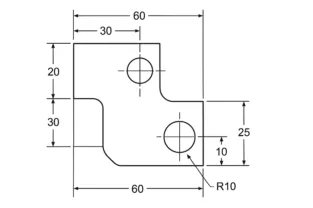
2D Mechanical Drawing

Learning how to create your first 2D Mechanical Drawing in AutoCAD can feel challenging at first, but once you understand the basic tools and workflow, the entire drafting process becomes smooth and enjoyable. AutoCAD is one of the most widely used CAD software in the mechanical engineering industry because of its precision, flexibility, and powerful drafting capabilities. Whether you are a student, beginner, or aspiring mechanical drafter, this step-by-step guide will help you confidently create accurate and professional 2D drawings.

2D Mechanical Drawing in AutoCAD

In this tutorial, we’ll walk through the essential stages of setting up your workspace, creating geometry, adding dimensions, and preparing your final drawing for printing or sharing. By the end, you’ll have a clear understanding of how to draft your first 2D Mechanical Drawing in AutoCAD from scratch.

1. Start by Setting Up Your AutoCAD Workspace

Before creating any drawing, it’s essential to set up your workspace for mechanical drafting. This includes choosing measurement units, limits, layers, and important drafting settings.

Steps:

  • Open AutoCAD and start a new drawing.
  • Type UNITS → set to Millimeters (or Inches) depending on the project.
  • Set the precision to a suitable value (typically 0.00 for mechanical drawings).
  • Use the LIMITS command to define your working area.
  • Type Z → A to zoom all.

A well-configured workspace ensures consistency and accuracy throughout your 2D Mechanical Drawing in AutoCAD.

2. Create Layers for Better Organization

Layers help you organize your drawing by separating objects like outlines, hidden lines, centerlines, hatching, and dimensions.

Suggested Layers:

  • Object (Continuous Line, 0.50 mm)
  • Centerline (Center Linetype)
  • Hidden (Hidden Linetype)
  • Dimension (Continuous, lighter color)
  • Hatch (Solid or pattern)

Use LAYER command → create these layers → assign colors and linetypes.
Always draw mechanical components on the correct layer for a neat and professional finish.

3. Start Creating Basic Shapes Using Drawing Tools

Mechanical drawings often begin with simple shapes—circles, lines, arcs, and rectangles—that later combine into complete machine components.

Important Tools to Use:

  • LINE
  • CIRCLE
  • ARC
  • RECTANGLE
  • POLYLINE

Example Steps:

  1. Draw the main body using the LINE or POLYLINE tool.
  2. Add circular holes using CIRCLE.
  3. Create fillets using the FILLET command.
  4. Use OFFSET to create parallel edges or features.
  5. Use TRIM and EXTEND to refine geometry.

Break the part down into simple features and draft them step-by-step. This method helps beginners build the entire 2D Mechanical Drawing in AutoCAD easily.

4. Add Centerlines and Hidden Lines

Mechanical drawings require proper representation of hidden edges and center points.

Add Centerlines:

  • Draw lines along the symmetry or center axis.
  • Use Center linetype for correct representation.

Add Hidden Lines:

  • Use dashed/hidden linetype to indicate features not visible from the viewing direction.
  • Ensure hidden lines do not overpower object lines.

These elements make your 2D Mechanical Drawing in AutoCAD follow industry drafting standards.

5. Use AutoCAD Modify Tools for Precision

Modify tools help refine your sketch to match exact mechanical dimensions.

Common Tools:

  • TRIM
  • EXTEND
  • FILLET
  • MIRROR
  • MOVE
  • COPY
  • OFFSET

For symmetrical parts, the MIRROR tool saves time and ensures perfect alignment.
For repeated features, use ARRAY command to create patterns like holes or slots.

6. Add Accurate Dimensions to Your Mechanical Drawing

Dimensioning is one of the most important parts of mechanical drafting. AutoCAD provides multiple dimensioning tools to capture sizes, distances, and angles.

Add Dimensions Using:

  • DIMLINEAR for straight edges
  • DIMDIAMETER for hole diameters
  • DIMRADIUS for arcs
  • DIMALIGNED for slanted edges
  • DIMCENTER for center marks
  • DIMANGULAR for angles

Make sure to:

  • Use consistent dimension text height (2.5 mm or as per standard).
  • Avoid overlapping or cluttered dimensions.
  • Follow standard dimensioning rules (ISO/ANSI).

Good dimensioning ensures the manufacturer can understand your 2D Mechanical Drawing in AutoCAD without confusion.

7. Apply Hatching for Section Views (Optional)

If your drawing includes a section view, add hatching to show material cut areas.

Steps:

  • Use HATCH command.
  • Choose appropriate pattern (ANSI31 is common for mechanical parts).
  • Select the area to apply hatch.
  • Adjust scale to match drawing size.

Hatching helps make your drawing more readable and professional.

8. Add Title Block and Border

A complete mechanical drawing includes a title block with essential information.

Include:

  • Part Name
  • Drawing Number
  • Material
  • Scale
  • Date
  • Drafter Name
  • Revision Table

Insert a pre-made title block or draw your own and place it in Layout Tab (Paper Space).

9. Prepare the Drawing for Printing (Plotting)

To finalize your 2D Mechanical Drawing in AutoCAD, set up plotting settings.

Steps:

  1. Switch to Layout View.
  2. Choose paper size (A4/A3/A2).
  3. Insert viewport and adjust scale (1:1, 1:2, 2:1 or as needed).
  4. Use PLOT command.
  5. Choose plot style monochrome.ctb for clean black & white output.

Your drawing is now ready for professional use.

Is AutoCAD good for beginners learning mechanical drafting?

Yes, AutoCAD is excellent for beginners learning mechanical drafting. We recommend it because its intuitive commands are easy to master, and it’s the industry standard used across Australian engineering firms and manufacturers. You’ll gain skills that are highly valued in the local job market, and our tutorial guides you through creating professional drawings that meet Australian Standards.

How long does it take to learn 2D Mechanical Drawing in AutoCAD?

Most beginners can start creating simple 2D mechanical drawings within 1–2 weeks of practice with AutoCAD. At ASTCAD, we recommend dedicating 2–3 hours daily to tutorials and hands-on projects to build confidence with essential tools like line, circle, and dimension commands. Proficiency with Australian drafting standards and technical conventions typically takes 4–6 weeks of consistent practice. We find that learners who engage with real-world Australian engineering projects progress faster and retain skills better.

Do I need engineering knowledge to make mechanical drawings?

You don’t need formal engineering qualifications to start creating mechanical drawings with our tutorials. We’ve designed our step-by-step guides for complete beginners, and many of our Australian users learn as they go, picking up essential drafting concepts like dimensions, tolerances, and Australian Standards conventions naturally through practice. Starting with basic 2D drawings helps you build confidence before moving to more complex projects, and our support team is here to help whenever you need guidance.

What is the most important part of a 2D mechanical drawing?

Accuracy is absolutely crucial in 2D mechanical drawings. We emphasise that precise geometry, dimensions, and clear annotations are essential for manufacturing, and this is particularly important in Australia where compliance with AS/NZS standards is mandatory. We recommend using AutoCAD’s precision tools and always verifying your measurements against Australian engineering specifications to ensure your drawings meet industry requirements and can be manufactured correctly.

Can I convert my 2D drawing into 3D later?

Yes. AutoCAD and many other CAD tools allow converting 2D sketches into 3D models.

JH

James Hartley

Senior Mechanical Engineer · BEng (Mechanical), UQ · Member, Engineers Australia · ASTCAD, Brisbane

James has 14 years of hands-on experience delivering CAD design, structural drafting, and engineering documentation across Australia’s mining, oil & gas, and manufacturing sectors. He specialises in SolidWorks, Autodesk Inventor, and AutoCAD for complex multi-discipline projects.

More articles by James Hartley →
CAD Drafting

Learning CAD drafting is one of the most valuable skills for anyone entering engineering, architecture, interior design, product development, or construction. However, beginners often face two major challenges: working efficiently and producing accurate designs. Improving your speed and accuracy takes practice, but with the right techniques, tools, and mindset, you can fast-track your growth and produce professional-level drawings in a short time.

In this guide, you’ll discover practical CAD Drafting tips and CAD Drafting tutorials-style insights that will help you draft faster, reduce errors, and improve overall precision.


Best CAD Drafting Guideline

1. Understand the Basics Before Going Advanced

Many beginners jump directly into complex commands and 3D tools without mastering the basics. But accuracy suffers when fundamental skills are weak.

Start by learning:

  • How layers work
  • The meaning of dimensions and annotations
  • Basic commands like Line, Trim, Offset, Extend, Fillet, Copy, and Move
  • How units, scales, and limits affect drawings

If your foundation is strong, your drafting speed will naturally increase because you won’t waste time correcting beginner mistakes.


2. Learn and Practice Keyboard Shortcuts

Every CAD software—AutoCAD, SolidWorks, Fusion 360, or Revit—offers keyboard shortcuts that significantly boost productivity. Clicking icons with a mouse repeatedly slows you down.

Examples in AutoCAD:

  • L = Line
  • TR = Trim
  • OF = Offset
  • CO = Copy
  • REC = Rectangle

Using shortcuts can easily save 2–3 hours per week.

Tip: Create a custom list of shortcuts and practice them daily for 10 minutes.


3. Use Templates to Avoid Repeat Work

Templates are one of the most underrated CAD Drafting tips, especially for beginners.

A good template includes:

  • Standard layers
  • Title blocks
  • Dimension styles
  • Text styles
  • Standard units

Instead of recreating these elements for every new drawing, simply open your template and start drafting immediately.

This increases speed and ensures consistency, accuracy, and professional standards.


4. Organize Your Layers Properly

Layer mismanagement is one of the biggest reasons beginners produce slow and inaccurate drawings.

Use layers for:

  • Walls
  • Dimensions
  • Centerlines
  • Furniture
  • Hidden lines
  • Annotations

Color-coding helps you visually differentiate elements and avoid mistakes.
A clean, well-structured layer system reduces rework by 50% and makes your drafting workflow efficient.


5. Follow CAD Standards (Company or Industry)

CAD standards ensure accuracy by maintaining uniformity in:

  • Line weights
  • Text size
  • Dimension style
  • Symbol usage
  • Layer naming conventions

When you follow professional standards, your drawing quality improves, and you spend less time fixing errors during revisions.


6. Make Use of Grids, Snaps, and Constraints

Snapping tools and grids help beginners maintain accuracy without relying solely on manual adjustments.

Use:

  • Ortho Mode for straight horizontal/vertical lines
  • Object Snap (OSNAP) for snapping to endpoints, midpoints, centers
  • Polar Tracking for angled lines
  • Constraints to maintain geometric relationships

These tools prevent alignment errors and ensure all elements connect correctly.


7. Break Complex Drawings into Simple Parts

One of the smartest CAD Drafting tutorials-style strategies is to simplify your drawing process.

Instead of drafting everything at once:

  1. Draw rough outlines
  2. Add main components
  3. Insert dimensions
  4. Add details
  5. Finalize annotations and layers

Working step-by-step improves both speed and precision.


8. Use Blocks to Save Time

Blocks help you reuse commonly drawn elements such as:

  • Doors
  • Windows
  • Fixtures
  • Symbols
  • Seating
  • Electrical components

When you use block libraries, you eliminate repetitive work and significantly boost speed.


9. Learn the Trim, Extend, and Fillet Commands Well

Trim, Extend, and Fillet are used millions of times across CAD drafting workflows.

These commands help beginners:

  • Clean up intersecting lines
  • Finish corners neatly
  • Maintain accuracy
  • Speed up repetitive drafting tasks

Mastering these commands will make your drafting much faster and more precise.


10. Clean Your Drawings Regularly

A messy drawing slows you down and increases the risk of errors.

Use tools like:

  • Purge (remove unused items)
  • Audit (fix errors)
  • Overkill (remove duplicate lines)

Clean drawings = faster work + fewer mistakes.


11. Practice with Real-World Projects

Theory helps, but real improvement comes from practice.

Try drafting:

  • A room layout
  • A mechanical part
  • A floor plan
  • A simple assembly
  • A site plan

Real-world challenges help you apply tools efficiently and improve your drafting accuracy faster.


12. Take Online CAD Drafting Tutorials

There are many free and paid tutorials for beginners:

  • AutoCAD official lessons
  • YouTube drafting channels
  • LinkedIn Learning
  • Udemy CAD Drafting tutorials
  • FreeCAD documentation

Learning from structured tutorials helps you gain speed, adopt professional methods, and avoid common beginner errors.


Conclusion

Improving your speed and accuracy in CAD drafting takes time, practice, and the right techniques. By learning shortcuts, organizing layers, using templates, following standards, and practicing real projects, beginners can quickly enhance their drafting efficiency and precision.
Use these CAD Drafting tips regularly, and you will see noticeable improvement in your skill level within weeks.

How can I draft faster in CAD as a beginner?

We recommend mastering keyboard shortcuts early, as this is the fastest way to improve your speed. Building a library of reusable blocks for common Australian building elements like standard wall details and roof configurations will save considerable time on repetitive tasks. Use snapping tools religiously to ensure accuracy and reduce rework, and organise your drawing layers logically from the start. Templates based on Australian standards will help you maintain consistency while drafting faster across all your projects.

What are the most important CAD commands for beginners?

At ASTCAD, we recommend mastering Line, Trim, Offset, Move, Copy, Extend, Fillet, and Dimension commands first. These core tools form the foundation for accurate Australian building and engineering drawings. We suggest practicing these commands repeatedly until they become muscle memory, then gradually exploring advanced features. Our experience shows beginners who focus on these essentials progress faster and produce drawings that meet Australian standards and comply with local building codes.

How do I avoid mistakes in CAD drafting?

We recommend using layers consistently to organize your drawing elements, enabling OSNAP features to ensure precise point placement, and following Australian Standards like AS 1100 for technical drawing conventions. Regularly audit and purge your files to remove unused objects that can slow performance and introduce errors. We also suggest maintaining a standard template that incorporates your office standards, which helps beginners work more accurately from the start and reduces costly revisions on projects.

Can CAD Drafting tutorials help improve accuracy?

Yes, CAD drafting tutorials are essential for improving accuracy. Our Australian tutorials teach step-by-step workflows aligned with local engineering standards like AS/NZS regulations, plus professional shortcuts that reduce errors. By following structured lessons and practicing with real-world Australian projects, beginners develop precision and confidence in their drafting work. We recommend combining tutorials with hands-on practice to master accuracy faster.

How long does it take to become good at CAD drafting?

With consistent practice and the right learning resources, beginners can become efficient within 2–3 months.


JH

James Hartley

Senior Mechanical Engineer · BEng (Mechanical), UQ · Member, Engineers Australia · ASTCAD, Brisbane

James has 14 years of hands-on experience delivering CAD design, structural drafting, and engineering documentation across Australia’s mining, oil & gas, and manufacturing sectors. He specialises in SolidWorks, Autodesk Inventor, and AutoCAD for complex multi-discipline projects.

More articles by James Hartley →
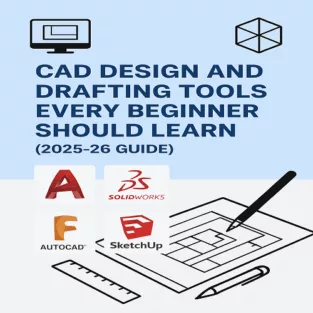
CAD Design and Drafting

As digital design continues to transform engineering, architecture, and manufacturing, CAD Design and Drafting has become one of the most essential skills in the modern technical world. Whether you’re a student, beginner, or aspiring designer, mastering the right CAD tools is the first step to building a strong foundation.

This 2025–26 Beginner Guide highlights the most important CAD software, tools, and features you should learn to grow in the field of CAD Design and Drafting. These tools are beginner-friendly, industry-approved, and widely used across different engineering and design sectors.


1. AutoCAD – The Foundation of CAD Design and Drafting

AutoCAD continues to be the world’s most recognized drafting software and the starting point for most beginners.

Why Beginners Should Learn It:

  • Simple interface for 2D drafting
  • Industry-standard for architectural and engineering drawing
  • Strong community tutorials
  • Excellent for learning command-based drafting

Key Tools to Master:

  • Line, Polyline, Circle, Trim, Extend
  • Layer Management
  • Dimensioning Tools
  • Blocks & Attributes
  • Layouts and Plotting

Beginners who understand AutoCAD build a strong base for advanced design tools.


2. SolidWorks – Best for 3D Mechanical Design

If you plan to work in mechanical engineering, product design, or manufacturing, SolidWorks is essential.

Why It’s Important in CAD Design and Drafting:

  • Highly intuitive for beginners
  • Feature-based parametric modeling
  • Used worldwide for 3D part modelling & assembly

Tools Beginners Must Learn:

  • Sketch Tools
  • Extrude, Revolve, Sweep
  • Assembly Mates
  • Fillets & Chamfers
  • Technical Drawing (2D Drafting from 3D Models)

SolidWorks is ideal for students looking to start a career in mechanical design and engineering.


3. Fusion 360 – All-in-One CAD for Beginners

Fusion 360 is gaining popularity in 2025–26 as the most versatile and affordable tool for learners.

Why Beginners Love Fusion 360:

  • Cloud-based
  • Combines CAD, CAM, CAE
  • Perfect for small businesses, students & hobbyists
  • Free versions available

Key Features to Learn:

  • Parametric Modeling
  • Form (Sculpt) Modeling
  • Simulation & Stress Test
  • CAM Toolpaths
  • Rendering Tools

Fusion 360 is a complete package for start-to-finish product development.


4. SketchUp – Easiest for Architectural CAD Drafting

For those planning a career in architecture or interior design, SketchUp is one of the simplest tools to begin with.

Why SketchUp Helps Beginners:

  • Extremely easy interface
  • Drag-and-draw modelling
  • Ideal for floor plans and 3D building models
  • Huge online library (3D Warehouse)

Learn These Tools:

  • Push/Pull
  • Move/Rotate/Scale
  • Scenes & Walkthrough
  • Layout for 2D sheets

SketchUp is the fastest way to start visualizing design ideas in 3D.


5. CATIA – Advanced CAD for Automotive & Aerospace

While more advanced, CATIA is important for beginners planning long-term careers in the automotive or aerospace industries.

Why It Matters:

  • Used by premium brands like Airbus, Boeing, BMW
  • High-end surfacing and mechanical design
  • Best for complex engineering projects

Beginner Tools:

  • Sketcher
  • Part Design
  • Wireframe & Surface
  • Assembly Design

CATIA is challenging, but learning basics early can give you an advantage in specialized industries.


6. Onshape – Cloud CAD for Collaboration

Onshape is a rising cloud-based CAD tool for students and teams.

Why It’s Useful in 2025–26:

  • No installation needed
  • Real-time collaboration
  • Version control & cloud storage

What Beginners Should Learn:

  • Sketch & Modeling
  • Assemblies
  • Configurations
  • Detailed Drawing Sheets

Onshape prepares beginners for modern, cloud-based design workflows.


7. Essential Drafting Tools Every Beginner Should Master

Regardless of the software, all beginners must learn these core CAD Design and Drafting tools:

2D Drafting Essentials

  • Line types & layers
  • Dimensions & annotations
  • Projection views
  • Symbol usage
  • Tolerancing basics

3D Modeling Essentials

  • Sketching constraints
  • Modelling features (extrude, revolve, loft)
  • Modifying tools (fillet, chamfer, shell)
  • Assemblies & constraints
  • Exploded views

Sheet Preparation Essentials

  • Title Block
  • Scale
  • Drawing standards (ISO / ASME)
  • BOM tables
  • View creation

These skills apply to all CAD platforms and form the base of professional drafting.


Tips for Beginners Learning CAD Design and Drafting (2025–26)

  • Start with AutoCAD or Fusion 360
  • Practice with free exercises online
  • Learn command shortcuts
  • Watch beginner tutorials
  • Join CAD communities on YouTube, Reddit, and LinkedIn
  • Practice daily for at least 30–60 minutes

Conclusion

Learning the right tools is the key to building a strong future in CAD Design and Drafting. Whether you’re interested in mechanical design, architecture, product development, or manufacturing, mastering these beginner-friendly CAD tools will give you a solid foundation for growth in 2025–26 and beyond.

Choose one software, start practicing, and gradually move to advanced tools as your skills improve. With consistent learning, CAD can open up high-demand career opportunities around the world.

What is the best CAD software for beginners?

For Australian beginners, we recommend starting with AutoCAD or Fusion 360 as they offer intuitive interfaces and strong support for local drafting standards. Both programs are widely used across Australian engineering and construction firms, making them excellent for building skills that employers value. We find these tools balance accessibility with professional-grade capabilities, helping newcomers transition smoothly into real-world projects whether you’re working on residential, commercial, or infrastructure designs.

Do I need powerful hardware for CAD Design and Drafting?

For 2D drafting, basic laptops work fine. For 3D modeling, look for at least 8–16 GB RAM and a good graphics card.

How long does it take to learn CAD?

With daily practice, beginners can start creating basic drawings within 2–4 weeks. Our experience working across Australian construction and engineering projects shows that most students grasp fundamental tools like line drawing, dimensioning, and layer management within this timeframe. To reach intermediate proficiency for professional drafting work, we typically recommend 3–6 months of consistent practice, especially when learning Australian standards like AS 1100 for technical drawing conventions. The timeline depends on your background and dedication, but our structured approach at ASTCAD helps accelerate your learning significantly.

Which CAD software is best for mechanical engineering?

For mechanical engineering in Australia, we recommend SolidWorks, CATIA, Fusion 360, and Creo as industry-leading options. We find that Fusion 360 offers excellent value for freelancers and small engineering firms across Australia, while SolidWorks remains the standard in larger manufacturing environments. Our experience shows these tools integrate well with Australian construction standards and export formats required by local councils and contractors. Consider your project complexity and budget when choosing—we’re happy to advise which suits your specific mechanical design needs.

Is CAD Drafting a good career in 2025–26?

Yes. CAD skills are in high demand in engineering, construction, product design, manufacturing, and architectural sectors.


JH

James Hartley

Senior Mechanical Engineer · BEng (Mechanical), UQ · Member, Engineers Australia · ASTCAD, Brisbane

James has 14 years of hands-on experience delivering CAD design, structural drafting, and engineering documentation across Australia’s mining, oil & gas, and manufacturing sectors. He specialises in SolidWorks, Autodesk Inventor, and AutoCAD for complex multi-discipline projects.

More articles by James Hartley →
CAD Drawings

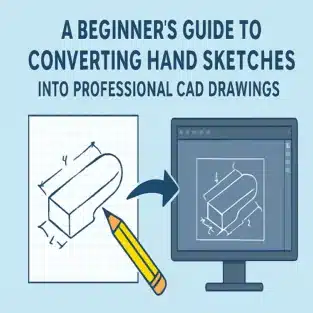
Turning hand-drawn sketches into detailed, accurate CAD drawings is one of the most important steps in today’s design, engineering, and construction workflows. Whether you’re an architect sketching a concept on paper, a product designer drawing your first prototype idea, or a homeowner planning renovations, converting a simple sketch into a computer-generated drawing unlocks clarity, precision, and professional quality.

This beginner-friendly guide walks you through the entire process step by step. By the end, you’ll understand exactly how to transform rough sketches into polished CAD drawings ready for manufacturing, construction, or presentation.


Why Convert Hand Sketches Into CAD Drawings?

Hand sketches are perfect for capturing ideas quickly. But for technical execution, you need accuracy. This is where CAD (Computer-Aided Design) comes in.

Here’s why converting your sketches into CAD drawings matters:

  • Precision: CAD software ensures correct dimensions, scale, and alignment.
  • Easy Editing: You can modify, update, or redesign quickly.
  • Professional Presentation: CAD drawings look clean and industry-standard.
  • Compatibility: CAD files can be shared with engineers, manufacturers, or drafting services.
  • 3D Capability: Sketches can evolve into 3D models for visualization.
  • Digital Archive: No risk of losing or damaging paper sketches.

For beginners, the conversion process may seem complex, but with the right steps, it becomes straightforward.


Step-by-Step Guide: How to Convert Hand Sketches Into Professional CAD Drawings


Step 1: Start With a Clear Hand Sketch

Your final CAD drawing is only as good as your initial sketch.

Tips for creating a clear sketch:

  • Use a pencil or black ink for visible lines.
  • Include basic dimensions (length, width, height).
  • Add notes or labels for specific features.
  • Keep the sketch clean—avoid smudges.
  • Use graph paper for better alignment (optional).

Remember, it doesn’t need to be perfect—just understandable.


Step 2: Scan or Photograph Your Sketch

The next step is to digitize your sketch.

Two simple methods:

1. Scan the Sketch

  • Use any flatbed scanner.
  • Save the file as PNG, JPG, or PDF.

Pros: High clarity and ideal for CAD tracing.

2. Photograph the Sketch

  • Use a smartphone camera.
  • Capture the sketch in good lighting.
  • Hold the camera parallel to avoid distortion.

Tip: Ensure edges are visible and lines are sharp.


Step 3: Import the Image Into Your CAD Software

Most CAD tools allow you to import a raster image (your sketch) and use it as a background layer.

Popular CAD software options:

  • AutoCAD
  • SolidWorks
  • Fusion 360
  • SketchUp
  • Revit (for architectural drafting)
  • LibreCAD (free)

Once imported, scale the image roughly to size. You’ll refine the scale later using dimensions.


Step 4: Trace the Geometry

Now the real drafting begins.

Use CAD tools like:

  • Line
  • Polyline
  • Arc
  • Circle
  • Spline
  • Trim
  • Offset

Follow the sketch lines and trace over them cleanly. This step transitions your rough drawing into professional CAD geometry.


Step 5: Add Dimensions and Annotations

CAD drawings must be dimensionally correct.

Add:

  • Linear dimensions
  • Angular dimensions
  • Radiuses and diameters
  • Notes and labels
  • Title block (if needed)

Make sure every important measurement is accurate. This step ensures your drawing can be used for fabrication or construction.


Step 6: Refine the Drawing

Check for:

  • Overlapping lines
  • Gaps
  • Incorrect snapping points
  • Layer organization
  • Line weights
  • Symbols and standard conventions

Good practice:

  • Use separate layers for walls, text, dimensions, and centerlines.
  • Apply standard drafting norms (ISO, ANSI, ASME depending on industry).

Step 7: Export the Final CAD Drawing

Once complete, export your drawing into the required formats.

Common file types include:

  • DWG (AutoCAD standard)
  • DXF (universally compatible)
  • PDF (for sharing or printing)
  • STL / STEP / IGES (if 3D modeling is used)

Your hand sketch is now officially a professional CAD drawing ready for real-world use.


Professional Option: Use CAD Conversion Services

If you’re new to CAD or short on time, hiring a CAD conversion service is a smart choice. Drafting professionals can turn your sketch into:

  • Architectural plans
  • Mechanical engineering drawings
  • Product design files
  • 2D and 3D models
  • Construction-ready blueprints

This ensures accuracy, compliance with standards, and fast turnaround.


Tips for Beginners

  • Start with simple shapes and structures.
  • Learn basic CAD shortcuts—they save hours.
  • Keep your layers organized from the beginning.
  • Watch beginner tutorials on your preferred CAD software.
  • Don’t stress over perfection—CAD allows unlimited refinement.

Conclusion

Converting hand sketches into professional CAD drawings bridges the gap between ideas and execution. Whether you’re designing a home, engineering a product, or sketching a creative concept, CAD gives you the precision and professionalism needed for real-world application.

With the steps in this beginner-friendly guide and the right tools (or professional drafting support), anyone can transform a simple sketch into a polished technical drawing.

Can I convert any type of sketch into CAD drawings?

Yes, we can convert almost any sketch into professional CAD drawings, whether it’s architectural layouts, mechanical parts, product concepts, or technical diagrams. Our team works with sketches in various states of completion and can interpret hand-drawn designs to meet Australian building codes, engineering standards, and council requirements. We’ll clarify any unclear details with you to ensure accuracy before finalising your drawings for submission or manufacturing.

Do I need expensive software to create CAD drawings?

Not necessarily. While professional CAD software exists at various price points, many affordable options work well for beginners. Free tools like LibreCAD and FreeCAD are solid choices, and Fusion 360 offers a free personal use license. At ASTCAD, we often recommend starting with these budget-friendly options before investing in premium software. For Australian drafting standards and compliance, we’re happy to guide you through selecting tools that meet local engineering requirements.

How accurate does my hand sketch need to be?

Your sketch doesn’t need to be perfect. As long as the idea and key dimensions are clear, our team can convert it into a precise CAD drawing that meets Australian building codes and engineering standards. We recommend including measurements, angles, and material notes where possible, but we’ll work with you to clarify any details during the conversion process.

What file formats do drafting professionals usually provide?

The most common file formats our Australian drafting professionals deliver are DWG and DXF for 2D drawings, which are industry standards compatible with AutoCAD and most engineering software used across Australia. For projects requiring 3D visualisation or manufacturing, we provide STEP or STL formats. PDF is also standard for client presentations and compliance documentation. We’ll discuss your specific requirements during the initial brief to ensure compatibility with your software and project needs.

Can CAD drawings be turned into 3D models?

Absolutely. Once your sketch is drafted in 2D CAD, it can be extruded or modeled into 3D using software like SolidWorks, Revit, or Fusion 360.


CS

Claire Sutton

Architectural CAD Specialist & Technical Writer · BArch (Hons), QUT · ASTCAD, Brisbane

Claire has 10 years of experience in Revit BIM modelling, architectural documentation, and CAD conversion projects across Southeast Queensland and NSW. She has delivered NCC-compliant documentation for residential, commercial, and industrial facilities.

More articles by Claire Sutton →
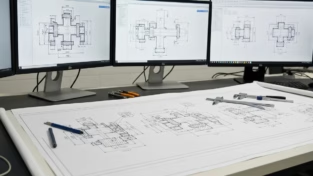
CAD drawing guide — AutoCAD blueprints and technical drawings on engineering workstation, Australia

A CAD drawing is a precise digital representation of an object, structure, or system created using Computer-Aided Design software. In Australian engineering and construction practice, CAD drawings are the primary deliverable across mechanical, structural, architectural, civil, and electrical disciplines — replacing hand drafting almost entirely since the late 1990s. This guide covers what CAD drawing is, how it works, the Australian Standards that govern it, and a practical step-by-step process for producing your first professional-grade CAD drawing.

What is a CAD drawing?

A CAD drawing is a two-dimensional or three-dimensional technical representation created using software such as AutoCAD, SolidWorks, Revit, or Fusion 360. Unlike a hand sketch, a CAD drawing is geometrically precise — every line has an exact length, every angle an exact value — and can be scaled, modified, and reused without redrawing from scratch.

In Australian engineering practice, CAD drawings serve different functions depending on their type. A detail drawing shows a single part with full dimensions and material callouts for manufacture. An assembly drawing shows how multiple parts fit together. A general arrangement (GA) drawing shows the overall layout of a system, plant, or building. A fabrication drawing provides all the information a workshop needs to manufacture a component — material, dimensions, weld symbols, surface treatment. Each type follows specific conventions under the Australian Standards for technical drawing.

Australian Standards for CAD drawings — AS 1100

In Australia, all engineering drawings must comply with the AS 1100 Technical Drawing series, published by Standards Australia. This is the Australian equivalent of ISO 128 (general principles of presentation) and defines the conventions, symbols, and notation that make Australian drawings legible to fabricators, certifiers, and engineers across the country.

  • AS 1100.101 — General principles: Line types, sheet sizes (A0 to A4), title block requirements, scale notation.
  • AS 1100.201 — Mechanical engineering drawing: Third-angle orthographic projection, section views, dimensioning conventions, surface texture symbols (Ra), and GD&T.
  • AS 1100.301 — Architectural drawing: North point, grid notation, room naming, symbol conventions.
  • AS 1100.501 — Structural engineering drawing: Reinforcement notation, weld symbols per AS/NZS 1554, structural steel section callouts using Australian designations (UB, UC, RHS, SHS, CHS).

One critical point for Australian drafters: third-angle projection is the default under AS 1100.201. Australian fabricators expect it. If working with European suppliers or clients, the projection symbol must be clearly marked on every sheet — mixing first-angle and third-angle views without explicit notation produces mirrored or inverted parts.

Types of CAD drawings used in Australian engineering

2D CAD drawings

Two-dimensional CAD drawings remain the primary deliverable for fabrication, construction, and approval documentation in Australia. A 2D CAD drawing shows an object using orthographic views — front, top, side — with dimensions, notes, and title block information. Tools used for 2D CAD in Australia include AutoCAD (by far the most common), DraftSight, and MicroStation. 2D CAD drawings are issued as PDF for review and approval, and as DWG or DXF for use by fabricators, CNC machines, and contractors.

3D CAD models and drawings

Three-dimensional CAD modelling is standard for mechanical product design and structural detailing. In SolidWorks, Autodesk Inventor, or Fusion 360, a 3D model is built first, and 2D drawings are then generated from the model. When sharing 3D models between different software packages, the STEP format (AP203 or AP242) is the modern standard — it preserves solid geometry, assembly structure, and optionally GD&T data across all major CAD systems. For architecture and building services, Autodesk Revit produces BIM drawings with embedded data about materials, finishes, and room areas.

Shop drawings and fabrication drawings

Shop drawings are produced by the fabricator (or a drafter on their behalf) from the engineer’s general arrangement drawings. They show how the fabricator intends to manufacture each component — individual member marks, shop and field welds, bolt grades, material grades, and surface treatment. In Australian structural steel practice, shop drawings are submitted to the structural engineer of record for review and approval before fabrication begins. See the fabrication shop drawing checklist for the complete list of items required on an Australian fabrication drawing.

Step-by-step: creating your first CAD drawing

Step 1 — Choose your CAD software

  • AutoCAD — the industry standard for 2D drafting across all disciplines. Used by most Australian drafting firms, fabricators, and contractors.
  • SolidWorks — the dominant 3D CAD platform for mechanical product design in Australian manufacturing, mining equipment, and oil & gas.
  • Autodesk Revit — the standard for architectural and structural BIM in Australian construction.
  • Autodesk Fusion 360 — a good entry point combining 3D modelling, simulation, and CAM in one subscription.
  • Tekla Structures — used by Australian structural steel fabricators and detailers for shop drawing production.

Step 2 — Set up your drawing environment to AS 1100

  • Units: millimetres for mechanical and structural, metres for civil and site work.
  • Sheet size: A1 (841 × 594mm) is the most common for engineering drawings in Australia.
  • Projection type: third-angle — add the projection symbol to your title block.
  • Dimension style: text height 3.5mm at A1 scale, filled arrowheads, decimal separator as a full stop.
  • Title block: every drawing must have drawing title, number, revision, date, scale, sheet size, projection symbol, drafter and checker names per AS 1100.101.

Step 3 — Draw your geometry

Start with the main orthographic views — front, top, and right side — arranged per third-angle projection. In AutoCAD, use LINE, CIRCLE, ARC, RECTANGLE, and OFFSET to build geometry. Keep geometry clean — no duplicate lines, no open polylines, no tiny gaps. For 3D CAD in SolidWorks: sketch on a reference plane, add geometric and dimensional constraints to fully define the sketch, then use Extrude, Revolve, or Sweep to create the solid.

Step 4 — Organise with layers

A well-organised layer structure makes a drawing easier to read, modify, and print. A typical ASTCAD AutoCAD layer structure uses: OUTLINE (0.5mm — visible edges), HIDDEN (0.25mm dashed), DIMENSION (0.25mm), ANNOTATION (0.18mm), HATCH (0.18mm), CENTRELINE (0.25mm chain), and TITLE (0.35mm). Never mix content types on the same layer.

Step 5 — Add dimensions per AS 1100.201

All dimensions in millimetres. Dimension lines minimum 10mm from the nearest visible edge. Overall length/width/height on every part. Reference dimensions in parentheses (150). General tolerance note: “Unless otherwise stated, all dimensions ±0.5mm.” Every hole dimensioned in the view showing it as a circle.

Step 6 — Add annotations, notes, and weld symbols

Beyond dimensions: material callout (e.g. “AS/NZS 3678 Grade 350”), surface treatment (e.g. “Hot-dip galvanise to AS/NZS 4680 after fabrication”), general notes (projection, units, tolerance, drawing standard), weld symbols per AS 1100.501 and AS/NZS 1554, and for structural drawings the weld inspection category (SP or GP per AS/NZS 1554.1).

Step 7 — Check and issue

Before issuing: verify all dimensions are present, check material callouts, confirm title block is complete with revision letter and date, verify weld symbols are correct. In AutoCAD, AUDIT finds and fixes file corruption; OVERKILL removes duplicate geometry. Issue as PDF for review and DWG for use — never issue a CAD file for fabrication without a corresponding PDF at the same revision.

Step 8 — Save in the correct formats

Australian engineering practice uses: DWG (universal 2D CAD exchange), DXF (for CNC and interoperability), PDF (issue, review, approval), STEP or IGES (3D model exchange between different CAD systems), STL (3D printing), and IFC (open BIM format for Revit model exchange). Always include the drawing number and revision in the filename — e.g. ASTCAD-MECH-001-Rev-C.pdf.

Key AutoCAD commands every drafter should know

The most-used AutoCAD commands for drawing production: L (Line), PL (Polyline), C (Circle), O (Offset), TR (Trim), EX (Extend), M (Move), CO (Copy), MI (Mirror), RO (Rotate), F (Fillet), CHA (Chamfer), H (Hatch), DLI (Dimension Linear), DCO (Dimension Continue), DRA (Dimension Radius), DDI (Dimension Diameter). Learning keyboard shortcuts rather than clicking through menus is what separates a fast professional drafter from a slow beginner.

Common CAD drawing errors and fixes

  1. Wrong projection symbol. Always show third-angle on Australian drawings. Mark first-angle explicitly when working internationally.
  2. Dimensions not in millimetres. A drawing produced in inches shared with an Australian fabricator will produce parts 25.4× the wrong size if the unit mismatch isn’t caught.
  3. Open geometry. Unclosed polylines cause hatching to fail and CNC toolpaths to break. Use BOUNDARY and PEDIT to close geometry before issuing.
  4. Missing material callout. Use specific specifications: “AS/NZS 3678 Grade 350” not just “steel”.
  5. Scale not stated on detail views. When a detail is at a different scale from the main drawing, state the scale adjacent to the view title.
  6. No revision cloud on updated drawings. Cloud the changed area and update the revision table on every re-issue.

Frequently asked questions

What is the difference between a CAD drawing and a CAD model?

A CAD model is a three-dimensional digital object — a solid, surface, or wireframe representation. A CAD drawing is a two-dimensional orthographic representation with dimensions, annotations, and title block information. The drawing is the document issued for fabrication or approval; the model is the design tool. In SolidWorks and Inventor, the 3D model is built first, then the 2D drawing is generated from it.

Does Australia use first-angle or third-angle projection?

Australia uses third-angle projection as the default per AS 1100.201. In third-angle, the right side view appears to the right of the front view and the top view appears above. Europe uses first-angle (ISO). The projection symbol must always be shown on Australian drawings — especially important when drawings may be sent to international suppliers.

What file format should Australian CAD drawings be issued in?

Issue as PDF (review, approval, printing) and DWG (contractor and fabricator use). For 3D model exchange, STEP (.stp) is the most universally accepted neutral format; IGES (.igs) is the legacy alternative. For CNC cutting, use DXF. Always include drawing number and revision in the filename.

How long does it take to learn CAD drawing professionally?

Basic 2D drawings in AutoCAD: 2–4 weeks of daily practice. Professional fabrication drawings to AS 1100: 3–6 months of hands-on work. Full 3D CAD proficiency (SolidWorks or Inventor): 12–18 months. ASTCAD’s drafter recruitment service can place experienced CAD drafters immediately when training time isn’t available.


Related resources: Engineering Drawing Guide — AS 1100 | Fabrication Shop Drawing Checklist | Sheet Metal Design Handbook | CAD Drafting Services

JH

James Hartley

Senior Mechanical Engineer · BEng (Mechanical), UQ · Member, Engineers Australia · ASTCAD, Brisbane

James has 14 years of hands-on experience delivering CAD design, structural drafting, and engineering documentation across Australia’s mining, oil & gas, and manufacturing sectors. He specialises in SolidWorks, Autodesk Inventor, and AutoCAD for complex multi-discipline projects.

More articles by James Hartley →
CAD Design and Drafting

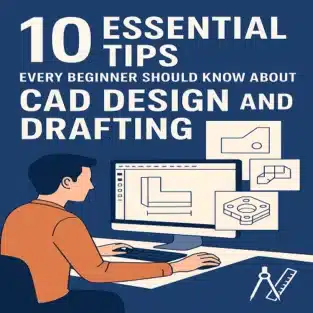
In today’s fast-paced design and engineering world, CAD Design and Drafting has become an indispensable skill for professionals and students alike. Whether you’re working on architectural plans, mechanical parts, or civil structures, mastering CAD tools can help bring your ideas to life with precision and efficiency. However, getting started can feel overwhelming for beginners. That’s why we’ve compiled 10 essential tips to help you learn, practice, and excel in CAD Design and Drafting.


CAD Design and Drafting

1. Understand the Basics of CAD Design and Drafting

Before diving into complex designs, take time to understand what CAD (Computer-Aided Design) and drafting really mean. CAD Design and Drafting involves using computer software to create detailed 2D drawings and 3D models used in construction, engineering, and manufacturing. Familiarize yourself with fundamental terms such as layers, dimensions, constraints, and views. Understanding these core concepts will make learning much smoother.


2. Choose the Right CAD Software

The market offers several CAD tools—such as AutoCAD, SolidWorks, Revit, Fusion 360, and CATIA—each suited for specific industries. For instance, architects often use AutoCAD and Revit, while mechanical engineers prefer SolidWorks or Fusion 360. Research your field of interest and start with software that matches your goals. Choosing the right platform from the beginning will save you time and confusion later.


3. Learn and Practice Keyboard Shortcuts

Efficiency is key in CAD Design and Drafting. Keyboard shortcuts can significantly speed up your work process and reduce the need for repetitive mouse actions. Spend some time learning the essential shortcuts for drawing, modifying, zooming, and navigating your workspace. As you become more comfortable, these shortcuts will help you complete drawings faster and more accurately.


4. Start with Simple Projects

Many beginners try to jump into advanced 3D modeling too quickly. Instead, start small. Create basic shapes, simple mechanical parts, or simple floor plans to get a feel for how CAD commands work. Gradually progress to more complex designs as you gain confidence. This step-by-step learning approach builds a strong foundation and prevents burnout.


5. Focus on Accuracy and Precision

In CAD Design and Drafting, even a small error can lead to major issues during production or construction. Always double-check measurements, dimensions, and scales. Use grid snapping, object tracking, and coordinate input to maintain accuracy. Remember, precision is what sets apart an amateur draftsperson from a professional one.


6. Organize Your Drawings Properly

A well-organized drawing makes collaboration and revision easier. Use layers, blocks, and groups to manage different elements of your design. For example, you can place electrical layouts, plumbing, and structural details on separate layers. This not only enhances readability but also simplifies future modifications and teamwork.


7. Learn to Read and Interpret Drawings

Good drafters are not just skilled at creating designs—they also know how to interpret them. Study various technical drawings and learn how to read line types, symbols, annotations, and dimension styles. This knowledge will help you understand design intent and communicate effectively with engineers, architects, and clients.


8. Master the Art of Dimensioning

Dimensioning is one of the most critical aspects of CAD Design and Drafting. Proper dimensions ensure that your design can be accurately manufactured or built. Learn the standards for dimension placement, units, and tolerances. Keep your drawings neat, readable, and compliant with industry standards to avoid costly misunderstandings.


9. Save, Backup, and Manage Your Files

Losing your work due to software crashes or accidental deletion is a nightmare every designer wants to avoid. Develop the habit of saving your work frequently and keeping multiple backups. Use cloud storage or version control tools to manage your files efficiently. File organization and data management are essential skills for every CAD designer.


10. Keep Learning and Stay Updated

Technology in CAD Design and Drafting evolves rapidly. New software features, plugins, and design trends emerge every year. Stay updated by following online tutorials, joining CAD forums, and participating in design communities. Continuous learning helps you remain competitive and opens the door to more advanced career opportunities.


Bonus Tip: Learn Industry Standards and Drafting Conventions

Every field—architecture, civil, or mechanical—follows specific drafting standards (like ISO, ASME, or ANSI). Understanding these conventions ensures that your drawings meet professional expectations and can be understood globally. Following proper standards also enhances the professionalism and credibility of your work.

Conclusion

Mastering CAD Design and Drafting doesn’t happen overnight—it’s a journey that requires patience, practice, and persistence. By following these ten essential tips, beginners can build a solid foundation in CAD skills and gradually move toward advanced design capabilities. Whether you aim to become an architect, engineer, or product designer, strong CAD drafting knowledge will open endless opportunities for innovation and career growth.

What is CAD Design and Drafting?

CAD Design and Drafting refers to the process of creating detailed technical drawings and models using computer software. At ASTCAD, we help Australian engineers, architects, and manufacturers produce precise digital designs that meet local building codes and standards. Our CAD services ensure your projects are accurately visualized before production, saving time and costs while maintaining compliance with Australian regulations and industry requirements.

Which software is best for beginners in CAD Design and Drafting?

For beginners, u003cstrongu003eAutoCADu003c/strongu003e is one of the best tools to start with. It offers a user-friendly interface, comprehensive tutorials, and is widely used across various industries. Once you master AutoCAD, you can explore specialized software like u003cstrongu003eSolidWorksu003c/strongu003e, u003cstrongu003eRevitu003c/strongu003e, or u003cstrongu003eFusion 360u003c/strongu003e.

How long does it take to learn CAD Design and Drafting?

The learning curve depends on your background and commitment. With consistent practice, most beginners can grasp the basics within 2–3 months. Advanced modeling and professional-level drafting may take 6 months to a year of dedicated learning.

Do I need an engineering or design background to learn CAD?

Not necessarily. While an engineering or design background helps, anyone can learn CAD design and drafting with the right guidance and practice. Here at ASTCAD, we’ve trained professionals from diverse backgrounds to master Australian building codes and drafting standards. Many online tutorials and certification courses are available for beginners, and our team can help you get started regardless of your experience level.

What career opportunities are available with CAD Design and Drafting skills?

CAD skills open doors to rewarding careers as draftsmen, design engineers, 3D modelers, architectural designers, and mechanical drafters across Australia. We see strong demand in construction, manufacturing, product design, and infrastructure sectors. Whether you’re working with local building codes, engineering standards, or specialized industries like mining and renewable energy, our professionals enjoy competitive salaries and excellent job security in a growing field.


JH

James Hartley

Senior Mechanical Engineer · BEng (Mechanical), UQ · Member, Engineers Australia · ASTCAD, Brisbane

James has 14 years of hands-on experience delivering CAD design, structural drafting, and engineering documentation across Australia’s mining, oil & gas, and manufacturing sectors. He specialises in SolidWorks, Autodesk Inventor, and AutoCAD for complex multi-discipline projects.

More articles by James Hartley →
Design and Drafting

In today’s world of architecture, engineering and construction (AEC) as well as mechanical and industrial design, design and drafting software plays a pivotal role. Whether you’re doing 2D floor plans, structural drawings, mechanical schematics or complex 3D models, selecting the right tool can significantly affect productivity, accuracy, collaboration and cost. This article walks you through how to choose appropriately.

1. Clarify Your Requirements

Before exploring products, it’s critical to define what you actually need in your design-and-drafting workflow.

  • Are you mostly doing 2D drafting (plans, sections, details) or is it full 3D modelling and BIM (building information modelling)?
    For instance, industry-standard tools like AutoCAD remain strong for 2D and general drafting. SCM Galaxy+4Wikipedia+4Creative Bloq+4
  • What industry are you in? Architectural, structural, mechanical, civil, product design? Each has different specialisations. For example, some tools target large infrastructure (e.g., MicroStation). Wikipedia
  • What file formats and compatibility do you need? Are you collaborating with others who use DWG, DXF, DGN, IFC, etc?
  • What is your team size and skill level? A solo freelancer might require differently than a large multidisciplinary firm.
  • What is your budget? Licencing models vary widely — subscription, perpetual, one-time purchase.
  • What hardware/platform support do you need? Windows only, Mac support, cloud-based, mobile, etc.

2. Evaluate Key Criteria

Once you’ve clarified requirements, you should evaluate potential software along several key dimensions.

a) Ease of Use & Learning Curve

Even the most feature-rich tool will be less useful if your team cannot adopt it quickly. A simpler interface reduces training time. Some users report:

“SketchUp is great … but the free version is really lacking now.” Reddit
So choose software with a UI and workflow your team can handle.

b) Feature Set for Design and Drafting

Since we’re talking about design and drafting, ensure the software supports both the creative/design side and the precision/documentation side:

  • Drawing tools: detailed lines, arcs, dimensions, annotations.
  • Modelling: 2D and (if needed) 3D geometry.
  • Drafting automation: blocks, symbols, templates, reuse of components.
  • Collaboration: referencing, import/export of other file formats, version control.
  • Industry-specific toolkits: some tools offer specialised modules for architecture, mechanical, structural etc. For example, AutoCAD offers architecture and mechanical verticals. Autodesk

c) File Compatibility & Standards

Working in a team or across firms often means you’ll exchange files. If your clients or collaborators use DWG/DXF or IFC or DGN, you’ll need software that supports those. For example, MicroStation supports DGN plus DWG. Wikipedia

d) Performance & Platform/Hardware Requirements

Software that demands heavy graphics or memory might require upgraded hardware. If you work on light laptops or in field, you might prefer a lighter tool. Some modern packages offer cloud/collaboration versions.

e) Cost & Licensing Model

Budget is important: some tools are expensive subscriptions monthly/yearly; others offer one-time pay or freer tiers (especially for students). For example, one list shows software pricing differences for 2025: SCM Galaxy+2Cotocus+2

f) Support, Community, Longevity

A large user base, active support, plentiful tutorials, plugins/extensions all matter. Choosing a tool likely to be around for years reduces risk of being stuck with unsupported software.

3. Match Tool to Use-Case

Here are some hypothetical matches to guide you:

  • Small freelance or beginner doing simple 2D drafting: choose something with low cost, low complexity.
  • Design-centric workflow where you focus on forms, 3D visualisation and models: select a tool strong in modelling and less emphasised on classic drafting.
  • Large firm needing documentation for construction and multidisciplinary coordination: pick a robust CAD/BIM tool with collaboration and industry-specific modules.
  • Mechanical/design engineering: you might need parametric modelling, product-design integration in addition to drafting.

4. Trial & Pilot

Before fully committing, you should:

  • Run a pilot project with the software using actual work or a mock-project.
  • Check how easily you import/export your existing drawings or models.
  • Measure training time.
  • Check how your team adopts it and whether productivity improvement justifies cost.
  • Check vendor support, plugin eco-system, and whether your workflow is supported.

5. Future-Proofing

Ensure you’re not locked into a tool that might restrict future growth. Consider:

  • Does it support newer trends e.g., BIM, parametric design, cloud collaboration?
  • Does it allow scaling from solo to team to enterprise?
  • Is the vendor regularly releasing updates and staying relevant?
    For example, lists of “top 10” CAD/design software show that tools supporting BIM and both 2D/3D workflows tend to have good staying power

Final Thoughts

Selecting the right software for design and drafting is not just about picking the “most famous” tool — it’s about choosing one that fits your workflow, budget, team, future growth and collaboration needs. By clarifying your requirements, evaluating key criteria, testing through pilot, and planning for the future, you’ll set yourself up for smoother, more productive work.

If you like, I can pull together a comparison table of the top 5-10 design & drafting software tools (with pros/cons, pricing, best use-cases) especially relevant to the Indian/Australian market. Would you like that?

What is the difference between “design and drafting” software and just “design” software?

Design and drafting” implies a tool that handles both the creative/design stage (modelling, visualization, iteration) u003cemu003eandu003c/emu003e the precise technical/drawing stage (annotations, dimensions, plans, sections) needed for documentation. Some tools focus more on conceptual modelling; others focus purely on drafting. You should pick one that covers both if your work flows from design through to construction or manufacturing.

Is it enough to pick a cheaper tool if budget is tight?

While budget is important, choosing the cheapest tool often costs more in the long run. If software lacks essential features like Australian standards compliance, interoperability with your team’s systems, or scalability as your projects grow, you’ll face costly rework and delays. We recommend evaluating total cost of ownership including training, licensing, hardware requirements, and lost productivity. The right investment in quality drafting software pays dividends through faster delivery and fewer revisions.

Do I need 3D modelling capability if I only do 2D plans?

Not necessarily, if your workflow is strictly 2D. However, even for “2D” based work, having 3D capability helps visualise things better, detect clashes, and future-proof your workflow. Many firms increasingly demand BIM/3D even when delivering 2D outputs.

How important is compatibility with other firms and clients?

Very important. Since you’ll exchange files with other Australian firms and clients, you’ll want software supporting common formats like DWG, DXF, IFC, and DGN. We recommend ensuring your chosen CAD solution integrates smoothly with industry standards used across construction, engineering, and surveying sectors locally. Incompatibility can cause costly delays and require frustrating conversion steps that waste your team’s time.

Can I switch software later if I make the wrong choice now?

Yes, you can switch later, but it’s costly once you’re invested in training and project standards. We recommend doing a pilot test first to avoid disruption. Since Australian projects increasingly require BIM compliance or parametric workflows, choose software with a clear upgrade path or migration support built in. This future-proofs your practice and makes transitions smoother if your needs evolve.

What about cloud-based or mobile CAD/drafting tools?

Cloud-based and mobile CAD tools are increasingly popular, especially for Australian teams managing remote sites or field operations across vast distances. We recommend these solutions for their real-time collaboration and flexibility, but ensure you verify offline capabilities for areas with patchy connectivity, robust file security for protecting your designs, and reliable performance when working on complex projects. Consider your team’s specific needs before switching from traditional desktop software.


JH

James Hartley

Senior Mechanical Engineer · BEng (Mechanical), UQ · Member, Engineers Australia · ASTCAD, Brisbane

James has 14 years of hands-on experience delivering CAD design, structural drafting, and engineering documentation across Australia’s mining, oil & gas, and manufacturing sectors. He specialises in SolidWorks, Autodesk Inventor, and AutoCAD for complex multi-discipline projects.

More articles by James Hartley →
CAD Drafting Services in Melbourne

In today’s competitive construction and engineering industry, CAD Drafting Services in Melbourne have become an essential part of every successful project. Whether you’re an architect, builder, or engineer, accurate and professional drafting plays a crucial role in bringing your ideas to life. However, with so many CAD service providers available, choosing the right one can be challenging. This guide will help you understand what to look for when selecting the best CAD drafting partner in Melbourne for your project.


Right CAD Drafting Services in Melbourne

1. Understand Your Project Requirements

Before you start searching for a CAD drafting company, clearly define your project needs. Are you working on an architectural plan, a mechanical component, or a civil structure? Each type of drafting requires different skill sets, software, and experience.
Make a checklist of your requirements, such as:

  • Type of project (architectural, structural, mechanical, electrical, etc.)
  • Required software (AutoCAD, Revit, SolidWorks, etc.)
  • Delivery timeline
  • Expected level of detailing

Having these details ready will make it easier to communicate your expectations and choose a provider who specializes in your field.


2. Check Their Experience and Expertise

Experience is one of the most important factors when choosing CAD Drafting Services in Melbourne. A company with several years of industry experience understands the local construction standards, council requirements, and Australian building codes.

Look for a team that has worked on a variety of projects, from residential and commercial to industrial and infrastructure developments. Experienced drafters can identify design challenges early and provide effective solutions, saving you time and money during the project execution stage.


3. Evaluate Software and Technology Used

The quality and accuracy of drafting largely depend on the software and tools used. Ensure that the company uses the latest versions of industry-standard software such as:

  • AutoCAD for 2D drafting and detailing
  • Revit for BIM (Building Information Modelling)
  • SolidWorks or Inventor for mechanical and product design
  • Civil 3D for civil and infrastructure projects

Advanced CAD software ensures high precision, easy revisions, and compatibility with other platforms used by engineers and architects.


4. Review Their Portfolio and Past Work

Always ask to see examples of previous projects before hiring a drafting service. A portfolio provides valuable insight into the company’s quality of work, design style, and attention to detail.

Check whether their drawings are clear, accurate, and compliant with Australian standards. Reviewing their past work will help you determine if they can meet your project’s complexity and technical requirements.


5. Consider Turnaround Time and Efficiency

Time is a critical factor in any construction or engineering project. The right CAD Drafting Services in Melbourne should deliver accurate drawings within your deadlines without compromising on quality.

Discuss turnaround times upfront. Reliable drafting firms often provide a clear project timeline and updates throughout the process, ensuring transparency and smooth communication.


6. Evaluate Communication and Support

Effective communication is key to any successful partnership. Choose a company that listens to your needs, understands your vision, and provides regular updates.

A good CAD drafting provider will not only deliver drawings but also collaborate with your team, clarify doubts, and offer design recommendations when needed. Quick response times and professional support can make a significant difference in project efficiency.


7. Check for Quality Assurance and Standards Compliance

When selecting a drafting service, ensure they follow strict quality control processes. The drawings should meet Australian standards (AS1100 for technical drawing practices) and local building codes.

Ask if the company performs internal reviews or audits before delivering the final drafts. A strong focus on quality assurance minimizes errors and ensures your designs are construction-ready.


8. Compare Pricing and Value for Money

While cost shouldn’t be the only deciding factor, it’s essential to compare quotes from different companies. Look for transparent pricing without hidden charges.

Avoid choosing the cheapest option, as low-cost services often compromise on accuracy or deliver incomplete work. Instead, aim for a provider that offers the best balance between quality, reliability, and affordability.


9. Look for Local Knowledge and Availability

Choosing a Melbourne-based CAD drafting company gives you access to local expertise. They are familiar with local council requirements, climatic conditions, and construction practices. This can be a huge advantage in ensuring your drawings meet all necessary compliance standards.

Local firms are also easier to contact for in-person meetings, site visits, or project discussions — ensuring better coordination throughout the drafting process.


10. Read Client Testimonials and Reviews

Before finalizing your choice, check client feedback on Google, social media, or the company’s website. Reviews often highlight the company’s professionalism, communication, and project delivery quality.

Positive testimonials are a strong indicator that the company values client satisfaction and consistently provides high-quality results.


Why Choose Professional CAD Drafting Services in Melbourne

Partnering with a professional CAD drafting company offers several benefits, including:

  • Accurate and detailed drawings for faster approvals
  • Improved design efficiency and reduced rework
  • Compliance with Australian building codes
  • Enhanced collaboration between architects, engineers, and contractors
  • Faster project delivery and cost savings

Investing in expert CAD drafting ensures your project progresses smoothly from design to construction, minimizing risks and maximizing efficiency.

Final Thoughts

Choosing the right CAD Drafting Services in Melbourne can make all the difference in the success of your project. From ensuring accuracy and compliance to enhancing design efficiency, a reliable drafting partner brings your vision to life with precision. Take the time to research, compare, and select a company that aligns with your goals — and you’ll enjoy smoother workflows, cost savings, and superior project outcomes.

What are CAD Drafting Services in Melbourne?

CAD Drafting Services in Melbourne involve creating detailed 2D and 3D technical drawings using computer-aided design software, tailored to Australian building codes and standards. We produce precise drawings essential for construction, manufacturing, and engineering projects across Victoria and beyond. Our services help ensure your designs comply with local regulations while meeting project timelines and budgets.

How do I choose the best CAD drafting company?

Look for a provider with relevant experience, strong technical skills, updated software, a quality portfolio, transparent pricing, and excellent client reviews.

What industries use CAD drafting services?

We serve a diverse range of industries across Australia, including architecture, civil engineering, structural design, mechanical engineering, electrical systems, and product manufacturing. Our CAD drafting expertise is particularly valuable for construction projects, infrastructure development, and manufacturing sectors that require precise technical documentation compliant with Australian building codes and standards.

How much do CAD Drafting Services in Melbourne cost?

The cost of CAD drafting services in Melbourne varies depending on your project complexity, drawing type, and delivery timeline. At ASTCAD, we provide competitive pricing that reflects Australian building standards and engineering requirements specific to your location. We recommend discussing your specific needs with our team to receive a detailed quote tailored to your project scope. Whether you need residential, commercial, or industrial drafting, we’ll work with you to deliver quality drawings within your budget.

Why should I hire a local CAD drafting service in Melbourne?

Hiring a local Melbourne CAD drafting service like ASTCAD means we understand Australian Building Standards, NCC compliance, and specific council requirements across Victoria. We’re familiar with local soil conditions, climate considerations, and regional building practices that impact your designs. Our team ensures your drawings meet all necessary approvals and are optimized for efficient construction, saving you time and potential costly revisions during the approval process.


CS

Claire Sutton

Architectural CAD Specialist & Technical Writer · BArch (Hons), QUT · ASTCAD, Brisbane

Claire has 10 years of experience in Revit BIM modelling, architectural documentation, and CAD conversion projects across Southeast Queensland and NSW. She has delivered NCC-compliant documentation for residential, commercial, and industrial facilities.

More articles by Claire Sutton →
Drafting

In today’s fast-paced construction and design industry, choosing the right CAD drafting services in Brisbane can significantly impact the success of your project. Whether you’re planning a residential build, a commercial development, or even a renovation, the right draftsman in Brisbane can turn your vision into a precise, practical design.

With so many providers offering various levels of expertise and services, how do you pick the right one? This guide will walk you through what to look for, what to avoid, and how to ensure you’re making a smart investment in your project’s future.


What Are CAD Drafting Services?

CAD (Computer-Aided Design) drafting services use specialized software to create precise technical drawings and plans used in construction, engineering, and manufacturing. In Brisbane, CAD drafting is essential for ensuring that all stakeholders—builders, architects, engineers, and clients—are aligned on a project’s technical details.


Why Choosing the Right Draftsman in Brisbane Matters

A draftsman in Brisbane doesn’t just draw; they translate your ideas into detailed drawings that meet local building codes, environmental regulations, and council requirements. A poor-quality drafting service can result in delays, costly revisions, or even legal issues.

Choosing the right professional ensures:

  • Accurate, council-compliant drawings
  • Efficient project timelines
  • Clear communication between all parties
  • Reduced risk of errors during construction

1. Check Qualifications and Experience

Not all draftsmen are equal. When selecting CAD drafting services in Brisbane, look for providers with:

  • Formal qualifications in drafting or building design
  • Experience in your project type (residential, commercial, industrial)
  • A portfolio of completed projects in Brisbane or nearby suburbs

Experienced draftsmen understand local regulations and have established relationships with Brisbane city council and other approval bodies.


2. Ask About Software and Technology

Modern drafting is powered by advanced CAD software such as AutoCAD, Revit, or ArchiCAD. The right CAD drafting services will utilize up-to-date software to ensure accuracy and compatibility with other consultants (architects, engineers, builders).

Ask the service provider:

  • What software do you use?
  • Can you provide 2D and 3D drawings?
  • Do you offer Building Information Modeling (BIM) integration?

3. Look for Local Knowledge

A draftsman in Brisbane should be familiar with:

  • Local building codes and council regulations
  • Climate considerations in Queensland (e.g., heat, storms, ventilation)
  • Design trends and materials suitable for Brisbane homes or commercial spaces

This local expertise can save you time and money by avoiding non-compliant designs or unnecessary revisions.


4. Compare Pricing and Inclusions

Price is important—but so is value. Some CAD drafting services may seem cheaper, but they may not include everything you need, such as:

  • Site visits
  • Council application assistance
  • Engineering coordination
  • Revisions

Request a detailed quote that outlines:

  • What’s included and excluded
  • Number of revisions allowed
  • Timeframe for delivery

Avoid services that are vague or unwilling to provide a written quote.


5. Check Reviews and Testimonials

Reputation matters. Look for client reviews on:

  • Google
  • Houzz
  • Local directories (e.g., Yellow Pages, TrueLocal)

Positive reviews indicate reliability, quality, and good communication. If possible, ask the company for references or examples of past projects similar to yours.


6. Ask About Turnaround Time

Time is critical in any project. Ask:

  • How long will the drafting process take?
  • When can you start?
  • What happens if I need changes?

A reliable draftsman in Brisbane will be upfront about their availability and process timelines, and they’ll communicate delays if they occur.


7. Ensure Clear Communication

The best CAD drafting services will:

  • Keep you updated regularly
  • Explain technical terms clearly
  • Be responsive to your questions

Good communication reduces misunderstandings and ensures your design vision is accurately captured.

Final Thoughts

Choosing the right CAD drafting services in Brisbane is a critical step in the success of your building or renovation project. By assessing qualifications, local knowledge, technology use, and communication skills, you can ensure your project starts on solid ground.

Don’t rush the decision. Take time to review portfolios, ask questions, and compare offerings. The right draftsman in Brisbane will not only save you time and money but also turn your vision into reality with clarity and precision.

What’s the difference between a draftsman and an architect?

A draftsman focuses on technical drawings and construction documentation, while an architect is trained in design theory, aesthetics, and complex building concepts. Draftsmen are generally more affordable and ideal for straightforward residential or commercial projects.

Are CAD drafting services in Brisbane council-approved?

At ASTCAD, we understand Brisbane City Council’s specific requirements and prepare all drawings to comply with local planning and building codes. While council approval isn’t automatic, our experienced team is familiar with the latest Brisbane regulations and can guide you through the submission process. We often assist clients with applications, ensuring your CAD drawings meet all necessary standards before lodgement, saving you time and potential revisions.

Do I need a draftsman for home renovations?

Yes, especially for structural changes, extensions, or council submissions. A u003cstrongu003edraftsman in Brisbaneu003c/strongu003e will ensure your plans are accurate and compliant.

Can I use a draftsman instead of an architect?

For most residential and small commercial projects, yes. Draftsmen offer a cost-effective alternative, especially when architectural design isn’t a priority.


CS

Claire Sutton

Architectural CAD Specialist & Technical Writer · BArch (Hons), QUT · ASTCAD, Brisbane

Claire has 10 years of experience in Revit BIM modelling, architectural documentation, and CAD conversion projects across Southeast Queensland and NSW. She has delivered NCC-compliant documentation for residential, commercial, and industrial facilities.

More articles by Claire Sutton →
CAD Drafting Services in Melbourne and Sydney

In today’s fast-paced design and construction industries, precision and efficiency are non-negotiable. Whether you’re an architect, engineer, builder, or property developer, choosing the right CAD drafting services in Melbourne can make a significant difference in the success of your project.

With numerous providers in both cities, it can be challenging to know which firm is right for your needs. This guide will help you evaluate and select the best CAD drafting partner for your specific requirements.


What Are CAD Drafting Services?

CAD (Computer-Aided Design) drafting involves creating accurate technical drawings and plans used in construction, architecture, engineering, and manufacturing. These digital drawings help professionals visualise, plan, and execute projects with precision.

From 2D floor plans to detailed 3D models, CAD drafting services in Sydney support everything from residential renovations to large-scale commercial developments.


Why the Right CAD Partner Matters

The quality of your CAD drawings directly affects your project’s accuracy, timeline, and cost. Choosing a substandard service could result in:

  • Costly design revisions
  • Construction delays
  • Compliance issues with local building codes
  • Inefficient communication with contractors and stakeholders

On the other hand, working with a professional, experienced drafting team can streamline your workflow, reduce risk, and ensure your vision becomes reality—on time and on budget.


Key Factors to Consider When Choosing CAD Drafting Services

1. Experience in Your Industry

Not all drafting firms are created equal. Look for CAD specialists with proven experience in your specific field—whether that’s residential architecture, commercial fit-outs, civil engineering, or mechanical design.

Tip: Check their portfolio and ask for examples of similar projects they’ve completed in Melbourne or Sydney.


2. Local Knowledge of Codes and Regulations

Each city has its own planning and building regulations. Choosing CAD drafting services in Melbourne and Sydney with local expertise ensures your designs are compliant with relevant council and state requirements.


3. Software and Technology Used

Ensure the company uses up-to-date and industry-standard software such as AutoCAD, Revit, or SolidWorks. Compatibility with your own tools (or your contractor’s) is essential for smooth collaboration.


4. Turnaround Time and Availability

Project deadlines are often tight. Ask about their average turnaround time and whether they can handle urgent or large-scale projects. Local firms tend to be more responsive and accessible for meetings or site visits in Melbourne and Sydney.


5. Pricing and Transparency

Get a detailed quote upfront and ask about their pricing model—hourly rate, per drawing, or package pricing. The cheapest option isn’t always the best. Look for value, reliability, and clear communication.


6. Client Reviews and Reputation

Research online reviews, testimonials, and Google ratings. Positive feedback from other clients in your area is a good indicator of a trustworthy and high-quality service.


7. Range of Services Offered

A full-service firm can save you time and coordination effort. Look for a provider that offers:

  • 2D and 3D drafting
  • Building Information Modelling (BIM)
  • As-built drawings
  • Engineering plans
  • Council-ready documentation

Benefits of Working with Local CAD Drafting Services in Melbourne and Sydney

  • Face-to-face collaboration: Meet your drafting team in person when needed
  • Faster site assessments: Local drafters can visit your site quickly
  • Knowledge of local suppliers and builders: Helpful for seamless integration

Final Thoughts

Choosing the right CAD drafting services in Melbourne and Sydney requires careful consideration of expertise, technology, local knowledge, and communication. By taking the time to evaluate your options, you can ensure your project starts with a solid foundation—literally and figuratively.

Whether you’re designing your dream home, planning a commercial space, or needing technical documentation for engineering, the right CAD partner is an investment in the quality and efficiency of your entire project.


Need help finding professional CAD drafting services in Melbourne or Sydney?
Look for firms with local experience, great reviews, and a strong portfolio to back them up—and don’t hesitate to ask the right questions before you commit.

How long does a typical drafting project take?

Project timelines at ASTCAD depend on scope and complexity. A standard residential floor plan typically takes 2–5 business days, while larger commercial or multi-level projects generally require 1–3 weeks. We factor in Australian building codes, council requirements, and any revisions you need. For urgent projects, we offer expedited services, and we’ll provide a detailed timeline estimate during our initial consultation so you know exactly what to expect.

Do I need a site visit for CAD drafting services?

While many projects can be completed using existing measurements or drawings, we recommend a site visit for higher accuracy, especially for renovations, as-built plans, or complex projects. Our CAD drafting services in Melbourne and Sydney include site visits as standard practice, allowing us to capture precise dimensions, understand site conditions, and ensure compliance with Australian building codes. This proactive approach minimizes costly revisions later.

Can CAD drafters help with council approvals?

Yes, our experienced CAD drafters can prepare comprehensive documentation for council submissions across Melbourne and Sydney. We’re familiar with local planning schemes, building codes, and specific council requirements in your area. Our team can create detailed plans for planning permits, building permits, and development applications, ensuring your designs meet Australian Standards and relevant council guidelines. This expertise helps streamline the approval process and reduces the risk of costly rejections or delays.

What file formats will I receive?

We provide your completed drawings in industry-standard DWG, PDF, and DXF formats, with options for 3D models and BIM-compatible files to suit architects, builders, and engineers across Melbourne and Sydney. Our team can also deliver files in additional formats based on your specific project requirements and software compatibility needs. We ensure all deliverables meet Australian building standards and are ready for council submissions or construction.


CS

Claire Sutton

Architectural CAD Specialist & Technical Writer · BArch (Hons), QUT · ASTCAD, Brisbane

Claire has 10 years of experience in Revit BIM modelling, architectural documentation, and CAD conversion projects across Southeast Queensland and NSW. She has delivered NCC-compliant documentation for residential, commercial, and industrial facilities.

More articles by Claire Sutton →
Get a free quote — 1800 287 223