3D CAD Drafting

Choosing Between 2D and 3D CAD Applications

It’s an argument covering 2D vs. 3D CAD applications that rages with developers and designers. It works on both sides, touting the merits and preferences with opposing CAD choices’ flaws. There would be a time when the argument seems academic to operations. Also, the project managers would have minimal exposure to its actual CAD interface. This article provides a clear perspective of the debate.

To begin with, the main difference between 2D and 3D applications should instead be self-explanatory. The 2D works solely on a single plane, while 3D allows the construction to realize three-dimensional surfaces fully. It is essential to note that 3D CAD makes proper usage of all image building techniques available within most 2D CAD applications.

It should allow users to open the third dimension and construct solid objects. It might seem that the signal at the end of the debate from the outset adds, why to argue that 2D CAD is superior in any setting if 3D CAD offers symmetrical capabilities. Therefore, the two other factors to consider when choosing 2D and 3D CAD software are required.

The first thing to note here is the price for how businesses prefer 3D CAD over 2D CAD drafting software. 3D CAD applications can inarguably be more expensive than older 2D software. It can sometimes tune to thousand dollars also. If you want to manage a small business or sole proprietorship, all you need is 2D CAD functionality. It’s a software upgrade with making the wisest choice.

Secondly, 3D CAD applications are far more complex. The users overcome a much steeper learning curve. Since it moves an object from a 2D environment into a 3D environment, it can increase the surface areas adding detail exponentially. Along with this, the control systems in 3D CAD applications are more difficult to master.

If you run a small shop with less than four CAD users, you need to consider the immediate decrease in capability where the shop experiences the software changeover from 2D to 3D. It staggers 3D implementation by adding the best choice. It allows half of the design force with upgrade while keeping others working on 2D applications. It should give an overall output nominal. As soon as your designers have acclimated to a 3D workspace, one can continue upgrading in segments.

In short, there’s no actual argument here. The 3D CAD applications are way superior in any design situation. However, implementation can cost more and would be time-consuming. Managers should be aware of this and plan CAD software upgrades accordingly.

Choosing between 2D and 3D CAD applications depends on your specific needs and the nature of your projects. Both 2D and 3D CAD software have their advantages and are suitable for different purposes. Here’s a breakdown of their characteristics to help you decide:

2D CAD Applications:

  1. Simplicity: 2D CAD software is generally easier to learn and use, making it a good choice for beginners or for simple drafting tasks.
  2. Drafting and Schematics: If your primary focus is on creating technical drawings, schematics, floor plans, or electrical diagrams, 2D CAD is often sufficient.
  3. Faster Production: 2D drawings can be quicker to produce, making them a better choice for projects where speed is crucial.
  4. Less Resource-Intensive: 2D CAD software typically requires fewer system resources, making it suitable for older hardware or less powerful computers.
  5. Cost-Effective: Many 2D CAD applications are more affordable than their 3D counterparts.

3D CAD Applications:

  1. Design Visualization: If you need to create realistic models, visualize designs in 3D, or simulate real-world scenarios, 3D CAD is essential.
  2. Prototyping and Testing: 3D models allow for virtual prototyping and testing before physical production, which can save time and resources.
  3. Complex Geometry: For intricate designs or products with complex shapes, 3D modeling provides greater accuracy and detail.
  4. Interdisciplinary Collaboration: 3D models are more comprehensive and can facilitate better communication and collaboration among various teams, such as design, engineering, and manufacturing.
  5. Animation and Rendering: If you want to create animations or high-quality renderings for presentations or marketing purposes, 3D CAD is necessary.

Considerations for Your Decision:

  1. Project Requirements: Assess the specific needs of your projects. Are you creating simple drawings, or do you need intricate 3D models?
  2. Learning Curve: Consider your skill level and the time you can invest in learning the software. 2D CAD is generally simpler to pick up.
  3. Collaboration: If you’re working with others, determine whether 2D or 3D models are more suitable for effective communication and collaboration.
  4. Future Growth: Consider whether your projects might evolve to require 3D capabilities in the future. Investing in 3D CAD now could save you from switching software later.
  5. Budget: Evaluate the cost of the software, including any ongoing licensing fees or subscriptions.
  6. Hardware: Check the system requirements of the software to ensure your computer can handle it.

If you’re looking for any help regarding design and drafting services, well, we are here. Please don’t hesitate to contact us at ASTCAD or call us at 1800 287 223 (Toll-Free).

What are the advantages of 3D over 2D CAD drafting?

u003cstrongu003eUsing 3D CAD drafting offers several advantages over traditional 2D drafting:u003c/strongu003eu003cbru003eu003cbru003eu003cstrongu003eVisualizationu003c/strongu003e: 3D CAD allows you to create realistic visualizations of your designs, which helps in better understanding and communication of the design intent.u003cbru003eu003cstrongu003eError Detectionu003c/strongu003e: With 3D CAD, you can detect errors and interferences more easily compared to 2D drafting. This helps in reducing design flaws and streamlining the design process.u003cbru003eu003cstrongu003eImproved Design Communicationu003c/strongu003e: 3D models provide a clearer representation of the final product, making it easier to communicate design ideas to stakeholders, clients, and team members.u003cbru003eu003cstrongu003eVirtual Prototypingu003c/strongu003e: 3D CAD enables the creation of virtual prototypes, which can be used for testing and simulation before physical prototypes are built. This helps in identifying and rectifying issues early in the design process, reducing time and cost.u003cbru003eu003cstrongu003eDesign Iterationsu003c/strongu003e: Iterating on designs is faster and more efficient in 3D CAD compared to 2D drafting. Modifications can be made to the 3D model with ease, allowing for rapid prototyping and experimentation.u003cbru003eu003cstrongu003eDocumentationu003c/strongu003e: 3D CAD software often includes tools for automatically generating detailed drawings, bills of materials, and other documentation, which can save time and reduce errors compared to manually creating these documents in 2D.u003cbru003eu003cstrongu003eIntegration with Other Softwareu003c/strongu003e: 3D CAD models can be easily integrated with other software tools such as analysis software, CAM (Computer-Aided Manufacturing) software, and simulation software, allowing for a more comprehensive design and manufacturing process.u003cbru003eu003cstrongu003eCost Savingsu003c/strongu003e: While the initial investment in 3D CAD software and training may be higher compared to 2D drafting, the long-term cost savings can be significant due to reduced errors, faster design iterations, and improved efficiency.

What is the difference between CAD and 3D CAD?

Computer-Aided Design (CAD) is a broad term that refers to the use of computer technology to assist in the creation, modification, analysis, or optimization of a design. CAD software allows engineers, architects, and designers to create precise drawings and models of objects, buildings, or systems in a digital environment.u003cbru003eu003cbru003e3D CAD, on the other hand, specifically focuses on creating three-dimensional models of objects or structures. While traditional CAD software may include 2D drafting capabilities, 3D CAD software primarily revolves around creating and manipulating 3D models. These models can be viewed from any angle, rotated, scaled, and even simulated to assess factors like structural integrity, performance, or aesthetics.u003cbru003eu003cbru003eIn summary, while CAD encompasses a broader range of design tools and techniques, 3D CAD specifically deals with the creation and manipulation of three-dimensional models.u003cbru003eu003cbru003eu003cbru003eu003cbru003eu003cbru003eu003cbru003e

JH

James Hartley

Senior Mechanical Engineer · BEng (Mechanical), UQ · Member, Engineers Australia · ASTCAD, Brisbane

James has 14 years of hands-on experience delivering CAD design, structural drafting, and engineering documentation across Australia’s mining, oil & gas, and manufacturing sectors. He specialises in SolidWorks, Autodesk Inventor, and AutoCAD for complex multi-discipline projects.

More articles by James Hartley →
CAD Design and Drafting

Less than two decades ago, the primary goal of most CAD Design and Drafting organizations was to provide up-to-date CAD workstations and a pleasant working environment for their CAD engineers and designers. Even today, the training of a CAD engineer focuses on equipping the engineer with the ability to define engineering problems and to use CAD tools to solve the problems.

When a new CAD engineer is recruited by a CAD company, some of the most important lessons that the engineer may learn during orientation and training include the following:

  • Design projects should be performed with specific company-approved Suitable CAD workstations, and design tasks should be performed under well-defined company guidelines,
  • Security guidelines should be followed religiously in order to protect company information, and the exchange of design information should occur within well-established protocols,
  • Workstations and the work environment are fenced by a company firewall, and any attempts to work outside the system are considered as a violation of company policy.

The fact is that within the last decade, cyber terrorism has become prevalent and sophisticated. It is not only national governments and national defence systems, financial institutions, or infrastructure systems which are targets for cyber terrorism. CAD Design and Drafting companies also spend money and resources to protect themselves from cyber terrorism.

CAD Design and Drafting

In this article, we try to answer the question: “How CAD Design and Drafting Industry fighting New Cyber Threats?” Because a complete answer to the question is not within the scope of this article, only these topics will be considered:

  • What is a cyber-attack?
  • How could a cyber-attack be waged on a CAD system?
  • What damages could a CAD company suffer from cyber terrorism?
  • How could cyber-attacks on CAD organizations be prevented or minimized?

What is a Cyber-Attack?

A cyber-attack is a malicious action which is designed to disrupt or cripple the computer systems of infrastructures, computer networks, or personal computing devices. The attacker or cyber-terrorist uses sophisticated methods to avoid detection because of the attacker’s intention to establish a foothold in the targeted computer system in order to steal, alter or destroy information in the system.

The methods used by cyber-terrorists include the planting of malicious software (malware) or viruses in the targeted system. When a cyber-attack on a CAD organization succeeds, the criminal or intruder could do the following:

  • Steal software or identities from the CAD organization,
  • Create denial of service to CAD engineers,
  • Steal or destroy intellectual property.

How Could a Cyber-Attack Be Waged on a CAD System?

Because methods of cyber-attacks have become increasingly sophisticated, it is necessary for IT engineers who work for CAD organizations to stay up to date with new cyber-attack methods.

The CAD engineer is too busy performing design tasks to become pre-occupied with cyber- attacks. Nevertheless, the CAD engineer should be keenly aware of avenues or entry points which could be open to the cyber-terrorist. These avenues could become open to the cyber-terrorist by performing these seemingly innocent practices:

  • Opening email attachments which could include malicious malware,
  • Downloading software, multimedia material, or unknown data from the web.
  • Inserting flash drives into USB ports.

Once a cyber-terrorist accesses the intended target, the criminal can quickly accomplish several tasks.

  • Probe for vulnerabilities and additional network access within the organization,
  • Use malware to establish additional breach points, so that the cyber-attack will be difficult to remove completely, even if the original point of attack is removed.
  • Establish network access; gather data such as account names and passwords. If the cyber-terrorist succeeds in cracking passwords, data can easily be collected from the victimized target.
  • Disguise the presence of planted malware on the network, in order to make it easier to return and steal more information, or to cause damage to the network.

What Damages Could a CAD company Suffer From Cyber terrorism?

It is not too difficult to imagine what types of damage a cyber-terrorist can cause to a CAD organization.

The main types of damage which could ruin or severely damage a CAD organization include:

  • Having designs stolen or destroyed. Even designs which are backed up within a cloud system will lose their proprietary status and could be exploited by competing organizations.
  • Suffering a denial-of-service attack which prevents CAD engineers from performing their work,
  • Having the network system brought down

Rather than try to enumerate other types of damage, it will suffice to mention vulnerabilities within CAD systems which have been exploited, or could be exploited by cyber terrorists.

  • The Stuxnet worm virus was used to target and damage Iranian centrifuges used to enrich uranium. The malware was sophisticated enough to make the technicians believe that the centrifuges were operating normally, while they were actually destroying themselves.
  • Malware in Bluetooth-enabled insulin pumps altered the dosage of insulin administered to a patient, with the intention of causing injury or death to the patent.
  • Malware planted within the software of a production machine could create defective parts while deceiving the production personnel into believing that they were producing acceptable parts.
  • The STL file format used for 3D Printing or AM (Additive Manufacturing) can be easily altered by malware so that 3D printers produce defective parts.

How Could Cyber-Attacks on CAD Organizations Be Prevented Or Minimized?

Cybersecurity or the ability to prevent new cyber-attacks or threats is a never-ending battle for IT professionals, because cyber crooks and terrorists are well trained, and they are always looking for new methods to practice their criminal behaviour. According to the viewpoint of a cybersecurity expert at CBIS (Washington DC-based Center for Strategic and International Studies), it may be more profitable for businesses to concentrate on detecting malware and on minimizing the damage they can cause.
CAD organizations could take additional steps to thwart the efforts of cyber terrorists. Some of these steps are:

  • CAD engineers should stay vigilant and should report any changes in the software environment to IT personnel.
  • CAD engineers should not open email attachments which do not come from well-known sources.
  • CAD engineers should not download data from sources outside their organization without the approval of IT personnel.
  • All USB or flash drives should be scanned for malware before they communicate with workstations.
  • CAD organizations should create segmented networks.
  • CAD organizations should promptly identify and quarantine unrecognized data within the network until the data has been cleared for safety.

If you all need any help regarding design and drafting services, please don’t hesitate to contact us at ASTCAD or call us 1800 287 223 (Toll-Free) Australia Wide.

What are the 4 types of CAD?

u003cstrongu003eComputer-Aided Design (CAD) encompasses various types of software used for designing, drafting, and modeling. The four primary types of CAD software are:u003c/strongu003eu003cbru003e2D CAD: These programs are used for creating two-dimensional drawings and designs. They are often employed in fields such as architecture, engineering, and manufacturing for tasks like creating floor plans, schematics, and technical drawings.u003cbru003eu003cbru003e3D CAD: 3D CAD software enables users to create three-dimensional models of objects or structures. This type of software is widely used across industries like automotive, aerospace, product design, and entertainment for visualizing and simulating designs before production.u003cbru003eu003cbru003eParametric CAD: Parametric CAD software allows designers to create models with parameters and constraints, enabling them to easily modify and update designs. Changes made to one part of the model can automatically propagate throughout the design, maintaining consistency and reducing errors. This type of CAD software is particularly useful for complex designs where interdependencies between components are critical.u003cbru003eu003cbru003eSolid Modeling: Solid modeling CAD software represents objects as solid entities with volume and mass. Users can manipulate these solid objects to create complex shapes and assemblies. Solid modeling is commonly used in product design, mechanical engineering, and architecture for creating detailed and realistic 3D models of components and structures.


JH

James Hartley

Senior Mechanical Engineer · BEng (Mechanical), UQ · Member, Engineers Australia · ASTCAD, Brisbane

James has 14 years of hands-on experience delivering CAD design, structural drafting, and engineering documentation across Australia’s mining, oil & gas, and manufacturing sectors. He specialises in SolidWorks, Autodesk Inventor, and AutoCAD for complex multi-discipline projects.

More articles by James Hartley →
How to be Best Drafter or Designer in your Field

Get set your new year resolutions by adding and establishing some professional goals. Setting goals are crucial progress, especially when it comes to business or career. Here are a few of my professional goals for 2016. These are the things that work well on becoming a better drafter and designer this year.

Best Drafter or Designer in your Field

If the above goals resonate with you, feel free to adopt and implement them in your professional career.There could always be something new to learn, and with all the resources available online, it would be more accessible than ever. One needs to learn something new about design, drafting, business, entrepreneurship, teamwork, marketing regularly.

Contribute, don’t consume

If you’re looking to work in a large office that is set from home as a freelancer, there would be a time when you’ll find yourself working as a team. There would be nothing worse than a passive team member. Consumes but never contributes, also make it a goal to become more active in your team and contribute.

Don’t be afraid to try new things

There’s this old saying, “If it isn’t broke, don’t fix it”, is true, but don’t let it stop you from trying new things. Sometimes it would be a good thing to get out of our comfort zone and try something new and different. Maybe it would be taken into a different design process, new marketing strategy or as simple as a new workstation layout. Trying new things is always an excellent way to challenge and help yourself grow.

Network more

In the last and a half year of running my drafting and design firm, we noticed networking is one crucial thing that’s needed to grow businesses with ease. Instead, it would help set up a workstation to meet new people and discuss the requirements. We should take this as an opportunity to find outside our comfort zone. Get ready to grow your network with another freelancer, business owner, drafter and designer.

Ask for help

Back to my first statement, “you don’t know everything”. Asking for help is not a sign of weakness but rather a vital growth step. It’s always important to have mentors from who you can seek advice. If you don’t have one already, make it a goal to find a mentor this year. Hey, maybe it’s going to be one of the new things that you try!

Take time off more often

It could be easy to forget about work/life balance when you’re passionate about what you do. Mainly, it’s true when working from home, let this year add a new year when you set aside a reasonable amount of time for your family and friends and get time to recharge.

Celebrate the wins

Always look for things that can be improved with fixing. It’s not necessarily a bad characteristic but can hurt you and your business. Therefore, why not celebrate our wins rather than be demotivated from our failures. Set a goal to celebrate the successes, even if they are small. When one finishes a project, celebrate it. Celebrate if you have landed a perfect job or found a new client.

How to be Best Drafter or Designer in your Field

  1. Master the Basics: Start by learning the fundamental principles of drafting and design. Understand the software tools used in your industry, such as AutoCAD, Adobe Creative Suite, or other specialized software.
  2. Education and Training: Pursue formal education or training in drafting and design. Consider enrolling in relevant courses, workshops, or obtaining a degree in a related field like architecture, engineering, graphic design, or industrial design.
  3. Practice Regularly: Practice is crucial to improving your skills. Dedicate time to drawing, designing, and drafting regularly. Take on personal projects to challenge yourself and explore new techniques.
  4. Seek Feedback: Share your work with mentors, peers, or online communities to receive constructive feedback. Being open to criticism will help you identify areas for improvement.
  5. Stay Updated: Design trends and software tools change rapidly, so make it a point to stay updated with the latest advancements and industry best practices. Follow design blogs, attend conferences, and participate in webinars to stay informed.
  6. Study Other Designers: Learn from the work of other successful designers in your field. Analyze their techniques, styles, and approaches to gain insights into what makes their designs stand out.
  7. Develop a Unique Style: While learning from others is essential, strive to develop your unique style and signature approach to design. Finding your creative voice can set you apart from others in the field.
  8. Collaborate and Network: Engage with other professionals in your industry, attend design events, and join professional organizations. Networking can open doors to new opportunities and expose you to different perspectives.
  9. Accept Challenges: Don’t be afraid to take on challenging projects that push your boundaries. Overcoming obstacles and tackling complex designs will help you grow as a drafter or designer.
  10. Be Persistent and Patient: Becoming the best in your field takes time and persistence. Keep working on improving your skills, and don’t get discouraged by setbacks or rejections.
  11. Showcase Your Work: Build a strong portfolio that showcases your best projects. Your portfolio will be a crucial tool in attracting clients or potential employers.
  12. Embrace Continuous Learning: The field of drafting and design is always evolving. Stay curious and keep learning new techniques and technologies throughout your career.

If you need help regarding design and drafting services, please do not hesitate to contact us at ASTCAD or call us at 1800 287 223 (Toll-Free) in Australia globally.


CS

Claire Sutton

Architectural CAD Specialist & Technical Writer · BArch (Hons), QUT · ASTCAD, Brisbane

Claire has 10 years of experience in Revit BIM modelling, architectural documentation, and CAD conversion projects across Southeast Queensland and NSW. She has delivered NCC-compliant documentation for residential, commercial, and industrial facilities.

More articles by Claire Sutton →
Civil Engineering

Any big projects success depends on cost effective CAD solutions. Project Managers are very careful when it comes to spending money and it should be that way since its one of the best important resource of projects. Increasing the profitability and decreasing the overhead cost becomes most important factors for any successful projects. We are going to examine how Civil engineering firm can able to achieve cost effective solution with 3D CAD design and drafting.

When cutting down cost implement successfully, Engineering firm already half on their mark to achieve goals. some of them can get the fact wrong, Cost controlling is not just not doing certain things to save money, but it is doing things more efficiently. Most engineering firms would use 3D CAD for designing and drafting purposes to do things more efficiently, and thus, control the costs. It is easier said than done, so let’s see how it’s done.

Cost Effective CAD Solutions for Civil Engineering

With 3D CAD, things are built virtually from scratch. Prototyping is made easier. Even before the building is built, you can virtually check the strength of the building. But, what has this got to do with costs? There’s a relation, suppose if you just didn’t do calculate the strength of the building properly, and the building collapsed due to some minor natural forces. It can cost you a lot, isn’t it? There are instances where this has happened, we will discuss that in some other article later on.  So, my point is that with 3D CAD, we can simulate environmental factors. And when important elements are factored in, flaws can be eliminated. You are avoiding heavy costs.

In 3D CAD, you can start working on elements individually. You can make changes to an element individually. So, chances of screwing some element when working on another are rare. And revisions are easy. 3D CAD comes along with 3D mouse, this would enable you to govern the tasks better with more precision. With more precision, the design cycles will be shorter. And when design cycles are shorter, you are saving the time, Again! Yes, people are performing the tasks at a great speed with 3D CAD.

This is saving you time, and if you are saving time, you can work on additional projects. You would require fewer people with 3D CAD relatively. There, you are saving bucks again! Someone who says he doesn’t want to save time would be lying.  It’s all about being efficient and saving time. And saving time is cutting down costs. And one who does save the time will be a champion.

Cost Effective CAD Solutions for Civil Engineering

Are you looking for an expert who could probably take care of your CAD drafting and designing concerns in civil engineering? ASTCAD services is in the CAD drafting and drawing industry from last 10 years. So, no worries about the quality of the work ASTCAD has to offer. ASTCAD can help you out in cost control with its 3D CAD services. ASTCAD just does the job like an extended in-house team with a lower turn-around time. And yes, we have advanced tools like Revit, Civil 3D, Tekla, etc.

So, want to save costs and grow your business? We can even offer you a free trial project that will help you understand the quality of the work that we have to offer with CAD.

There are numerous within your means Computer-Aided Design (CAD) options accessible for civil engineering professionals. These tools provide a vary of aspects for designing, analyzing, and documenting civil engineering projects. Here are some alternatives to consider:

AutoCAD LT: This is a lighter and greater low priced model of AutoCAD, which is a broadly used CAD software. AutoCAD LT affords 2D drafting and detailing tools, making it appropriate for developing technical drawings and documentation.

DraftSight: DraftSight is a 2D drafting and 3D plan software program that affords a acquainted person interface for these transitioning from different CAD platforms. It gives vital aspects for creating, editing, and annotating drawings.

LibreCAD: LibreCAD is an open-source 2D CAD utility that is appropriate for small to medium-sized civil engineering projects. It’s simple and gives fundamental drawing and enhancing tools.

BricsCAD: BricsCAD provides a comparatively cheap choice to AutoCAD with complete 2D and 3D drafting capabilities. It’s recognized for its compatibility with AutoCAD archives and presents a vary of specialised modules for civil engineering design.

FreeCAD: FreeCAD is an open-source parametric 3D CAD modeler. While it is extra centered on 3D modeling, it can be used for primary civil engineering duties and is specifically beneficial for designing buildings and components.

NanoCAD: NanoCAD is a free and budget-friendly CAD software program that presents 2D drafting and graph tools. It’s appropriate for growing technical drawings, schematics, and architectural plans.

CMS IntelliCAD: CMS IntelliCAD is an low cost CAD software program with AutoCAD compatibility. It presents 2D and 3D drafting competencies and is regularly used with the aid of civil engineers and architects.

SketchUp Free: While notably regarded for architectural design, SketchUp Free can additionally be used for fundamental civil engineering projects. It’s a 3D modeling device that is handy to research and affords each free and paid versions.

QCAD: QCAD is a 2D CAD software program it is easy and intuitive. It’s mainly beneficial for growing technical drawings, schematics, and plans.

Tinkercad: Tinkercad is a browser-based 3D modeling device that is basic and appropriate for fundamental civil engineering format tasks. It’s free and handy online.

To schedule a personal meeting with our  Representative or contact Sales Team on: 1800 287 223 (1800AUSCAD)

For more information, log on to: www.astcad.com.au or drop an e-mail at: info@astcad.com.au

What are 7 types of civil engineers?

u003cstrongu003eCivil engineering is a broad field with various specializations. Here are seven types of civil engineers:u003c/strongu003eu003cbru003eu003cbru003eu003cstrongu003eStructural Engineers: u003c/strongu003eThey design and analyze structures such as buildings, bridges, dams, and towers to ensure they can withstand environmental loads and remain safe and stable.u003cbru003eu003cstrongu003eGeotechnical Engineers:u003c/strongu003e These engineers study the behavior of earth materials like soil and rocks and their interaction with structures. They assess site conditions for construction projects and design foundations and earthworks.u003cbru003eu003cstrongu003eTransportation Engineers: u003c/strongu003eThey focus on designing and improving transportation systems, including roads, highways, railways, airports, and public transit systems, to ensure efficient and safe movement of people and goods.u003cbru003eu003cstrongu003eEnvironmental Engineers: u003c/strongu003eEnvironmental engineers work to protect the environment and public health. They deal with issues like water and air pollution, waste management, and environmental remediation, designing solutions to minimize negative impacts and promote sustainability.u003cbru003eu003cstrongu003eWater Resources Engineers:u003c/strongu003e These engineers manage water resources such as rivers, lakes, groundwater, and stormwater. They design systems for water supply, flood control, irrigation, and wastewater treatment.u003cbru003eu003cstrongu003eConstruction Engineers:u003c/strongu003e Construction engineers manage construction projects from planning to completion. They coordinate resources, schedules, and budgets to ensure projects are completed safely, on time, and within budget.u003cbru003eu003cstrongu003eCoastal Engineers: u003c/strongu003eCoastal engineers specialize in managing coastal areas and addressing challenges related to erosion, flooding, and coastal infrastructure. They design coastal protection structures, such as seawalls and breakwaters, to mitigate the impacts of coastal hazards.

what is civil engineering?

Civil engineering is a branch of engineering that deals with the design, construction, and maintenance of infrastructure and built environments. It encompasses a wide range of projects, including buildings, bridges, roads, railways, airports, dams, water supply systems, wastewater treatment plants, and more.u003cbru003eu003cbru003eCivil engineers are responsible for ensuring that these structures and systems are safe, sustainable, and efficient. They work on projects from the planning and design stages through construction and maintenance, considering factors such as materials, environmental impact, economic feasibility, and regulatory requirements.u003cbru003eu003cbru003eKey areas within civil engineering include structural engineering, geotechnical engineering, transportation engineering, environmental engineering, water resources engineering, construction engineering, and coastal engineering, among others. Civil engineers play a crucial role in shaping the physical infrastructure of societies and improving the quality of life for communities around the world.


JH

James Hartley

Senior Mechanical Engineer · BEng (Mechanical), UQ · Member, Engineers Australia · ASTCAD, Brisbane

James has 14 years of hands-on experience delivering CAD design, structural drafting, and engineering documentation across Australia’s mining, oil & gas, and manufacturing sectors. He specialises in SolidWorks, Autodesk Inventor, and AutoCAD for complex multi-discipline projects.

More articles by James Hartley →
Solidworks Cad Data management

It is no secret that managing Gigabytes of CAD data can be tough. Especially if you’re a new comer to a company that contains years of legacy data, you’ll probably be spending at least 2 hours a day on non-essential task, which is sorting out your files.

Solidworks Cad

What’s more, every department in a company (or dare I say every employee in a company), has their own way of sorting their files. Yes, a company may enforce a rule that any files checked into the server of the company follows a certain nomenclature, but who is going to enforce it?

Poor Data Management leads to many issues such as:

  • Poor Decisions based on faulty or poor information
  • Duplicated efforts because one users did not know that the work he is doing was already done by someone else and it was in the company’s data storage
  • Lost of sales because customer’s cant get the information in time and leaves in frustration
  • Lost of productivity as employees disturbs other employees for data that is already there but can’t find them

This is where a data management needs to be more than just a security center. It needs to be an intelligent vault. Introducing an intelligent PDM system, called SOLIDWORKS Product Data Management (PDM).

Nothing screams horror than sifting through an assembly with 1000s of parts just so that you pull it out replace with another. Another concern would also be to pinpoint where a particular standard part is used (Important if you need to replace a part thought to be standard with a revised version).

The default Microsoft search function may not be able to help you find you the parts you want as search function are based on how the OS indexes the files. With SOLIDWORKS PDM, all your CAD files are promptly indexed to make the search function more powerful and accurate. With the ability to give you where the files has been used and the history of the file, you can quickly and efficiently get the information you need!

If you are in an organisation whereby a few engineers work on a same project, you would most likely fall in the trap of working on a file in which someone else is working on at the same time. At the end of the day when it comes to putting it all together, nothing fits! Back to the drawing board….

Solidworks Cad Data Management

PDM controls the flow of all the documents, making sure each users knows the status of the file. If one person is working on a file, others may still view it, but not work on it until the initial user is done. Think of PDM as your friendly traffic police, making sure the flow of documents keeps moving without a hiccup.

Sometimes when a particular step goes idle, due to:

  1. Awaiting confirmation on the green light
  2. Awaiting confirmation that a correction is needed
  3. Awaiting for other departments to make a move

The user may also forget about his/her own movement in the project, and they are not aware of the status of the steps mentioned above.

With PDM, the process workflow defined in the PDM system keeps you updated about what steps are currently in progress and who is in charge. Built in is also the Notification Capability, which reminds the person-in-charge to keep the process going, so that no time is wasted!

The biggest concern about any data management solution is whether:

  1. Is it easy to manage?
  2. Do I need to hire an IT person to constantly look over it?

Be assured that the PDM solution will keep your data safe, organised and compliant.

One of the biggest roadblocks to adopting a data management systems is the fear that users may not get used to the system, which locks them out from the pool of data. Well that is not the case with PDM. With its tight integration with Windows, accessing files is as easy as using Windows explorer, opening folders to access the files. With its structured way of checking in/out of files, you will be assured that any files being opened or entered the vault is following company protocol.

It’s a step-by-step method which keeps all your files organised and populated with essential date.

File history is always difficult to track unless the right discipline is instilled in the user. By default, most users when it comes to editing an old file will just save the new version over it, completely destroying the older version of the file. What happens is that:

  • Nobody knows what changes were made
  • Nobody knows who made the changes
  • And if the new version is not acceptable and need to revert back, its not possible! (Time wasted in recreating the old version)

So why not let PDM do that with you? It keeps track of the entire history of your files, AUTOMATICALLY! Let engineers do the designing, and PDM on the file management.

SOLIDWORKS Enterprise PDM includes:

> File management: centralised file vaulting capabilities to manage and control electronic intellectual property and product design data

> Revision management: track changes, maintain a complete revision history of a design’s evolution, and avoid the errors of manual approaches

> Bill of materials (BOM) management: a range of tools for making BOM information management more efficient, enabling you to export BOM data in multiple ways to use in downstream applications and systems

> Distributed collaboration: keep people connected, up to date, and working on the same set of data, regardless of their location

> Regulatory compliance: helps you comply with government regulatory requirements or industry standards for controlled development processes and product documentation

> Design reuse: create a framework for quickly locating and reusing or repurposing existing design data

> Engineering change management: significantly reduce the time needed to complete your design approval and engineering change order (ECO) processes with the automated electronic workflow system

> Secure file vaulting: securely control access to sensitive or proprietary product information

> Enterprise scalability: easily connect the design data needs of your entire enterprise, whether for just a few users in a single location or hundreds of contributors working in multiple locations around the world

If you would like to know more about PDM, CAD Data Management please feel free to contact us at +61 731 493 547 or email info@astcad.com.au, and our EPDM experts would be happy to help!

ASTCAD provides quality solidworks drafting service around Brisbane, Sydney, Melbourne, Perth, GoldCoast. We also provide affordable contract Solidworks drafter, Solidworks designer with short notice!..

What is CAD data management?

CAD data management refers to the process of organizing, storing, and controlling computer-aided design (CAD) files and related data throughout their lifecycle. This includes managing various types of CAD files, such as 2D drawings, 3D models, assemblies, and associated documents.u003cbru003eu003cstrongu003eThe goals of CAD data management typically include:u003c/strongu003eu003cbru003eu003cstrongu003eOrganizationu003c/strongu003e: Ensuring that CAD files are stored in a logical and structured manner so that they can be easily located and accessed when needed.u003cbru003eu003cstrongu003eVersion Controlu003c/strongu003e: Tracking different versions of CAD files to avoid confusion and ensure that the latest version is always being used.u003cbru003eu003cstrongu003eAccess Controlu003c/strongu003e: Controlling who can access, view, edit, and delete CAD files to maintain data security and prevent unauthorized changes.u003cbru003eu003cstrongu003eCollaborationu003c/strongu003e: Facilitating collaboration among team members by providing tools for sharing CAD files, tracking changes, and managing concurrent design activities.u003cbru003eu003cstrongu003eData Integrityu003c/strongu003e: Ensuring the accuracy, consistency, and completeness of CAD data throughout its lifecycle, including during creation, modification, and archiving.u003cbru003eu003cstrongu003eIntegrationu003c/strongu003e: Integrating CAD data management with other systems and processes, such as product lifecycle management (PLM), enterprise resource planning (ERP), and document management systems, to streamline workflows and improve efficiency.

What is solidworks product data management?

SolidWorks Product Data Management (PDM) is a software solution provided by Dassault Systèmes SolidWorks Corporation for managing SolidWorks CAD files and other related design data. It is designed to streamline the process of managing design and engineering data throughout its lifecycle, from initial creation to final production.u003cbru003eu003cbru003eu003cstrongu003eSolidWorks PDM offers a range of features and capabilities, including:u003c/strongu003eu003cbru003eu003cstrongu003eFile Managementu003c/strongu003e: Organizing SolidWorks CAD files, assemblies, drawings, and other documents in a centralized repository, making it easy to locate, access, and share data.u003cbru003eu003cstrongu003eVersion Controlu003c/strongu003e: Tracking different versions of files and managing revisions to ensure that the correct and up-to-date versions are always being used.u003cbru003eu003cstrongu003eRevision Controlu003c/strongu003e: Managing revisions to files, including assigning revision numbers, tracking changes, and maintaining a history of revisions for audit purposes.u003cbru003eu003cstrongu003eWorkflow Managementu003c/strongu003e: Defining and automating workflows for design processes, such as review and approval workflows, to ensure that tasks are completed efficiently and according to established procedures.u003cbru003eu003cstrongu003eAccess Controlu003c/strongu003e: Controlling access to files and data, including defining user permissions and access rights to ensure data security and prevent unauthorized changes.u003cbru003eu003cstrongu003eCollaborationu003c/strongu003e: Facilitating collaboration among team members by providing tools for sharing files, communicating feedback, and coordinating design activities.u003cbru003eu003cstrongu003eIntegrationu003c/strongu003e: Integrating with other SolidWorks products, such as SolidWorks CAD software, as well as with third-party applications and systems, to streamline data exchange and improve interoperability.


JH

James Hartley

Senior Mechanical Engineer · BEng (Mechanical), UQ · Member, Engineers Australia · ASTCAD, Brisbane

James has 14 years of hands-on experience delivering CAD design, structural drafting, and engineering documentation across Australia’s mining, oil & gas, and manufacturing sectors. He specialises in SolidWorks, Autodesk Inventor, and AutoCAD for complex multi-discipline projects.

More articles by James Hartley →
2d drafting services

We are one of the best Australian Design & Drafting service companies that offer a cutting-edge 2D drafting solution. Without investing in expensive technology or going through any tedious recruitment headaches. If you’re looking for the importance of effective 2D drafting, then we offer various types of 2D drafting services. Additionally, there are numerous advantages provided by ASTCAD that comes with outsourcing.

Suppose you’re a firm that looks to draw out a design for a home, office, restaurant or any other type of building. Additionally, users can add a critical role that uses 2D drafting, offering a successful outcome.

We provide 2D drafting that uses one step that cannot be affordable to skip. It comes through encountering the problems when designing your building. Additionally, 2D drafting requires skills, time, and expertise. With outsourcing, one should not worry about doing 2D drafting. Users can outsource 2D drafting by adding ASTCAD service company. Now get big by saving time, effort and cost.

2D drafting services offered:

No matter what type of design plan users want, they can avail effective 2D drafting plan. It outsources ASTCAD services by offering the best mechanical engineers. 2D drafters come with their skills and knowledge to deliver cutting-edge 2D drafting services for your building. Users can avail of 2D drafting services for below following services:

  • Architectural drawings
  • Preliminary drawings
  • Millwork drawings
  • Structural design drawings
  • Engineering (MEP) drawings
  • Construction or working drawings
  • Assembly drawings
  • Shop drawings
  • Manufacturing drawings
  • Fabrication drawings
  • Presentation drawings
  • Machine drawings
  • Structural steel detailing

What makes ASTCAD the best place for 2D drafting?

Here’s why the ASTCAD company use Australia’s preferred location for 2D drafting:

  1. Use Latest 2D drafting software and tools: ASTCAD comes with the latest 2D drafting tools and software. It includes Autodesk, AutoCAD®, MicroStation®, SolidWorks®, Staad Pro®, Ansys®, 3DS Max®, VRay, Unigraphics/NX, X-Steel, Revit®, ProE®, CATIA®, ® Inventor® and to create world-class 2D drafts.
  1. Skilled 2D drafters: Outsource 2D drafting with the ASTCAD service company, and offer access to a professional team of drafters and engineers. It collaborates with the company, understanding the needs and offering satisfactory 2D drafting solutions.

We offer a 2D drafting solution with preliminary drawings, architectural drawings, and other structural drawings. Develop a firm base for using design plans.

  1. 2D drafting in CAD: We at ASTCAD comes with extensive knowledge of conducting 2D drafting in CAD, along with exact scaling and specifications added by you.
  2. Huge cost savings: By outsourcing, one can cut down current costs by 50%. It provides access to drawn 2D drafts that meet your expectations.

Outsource 2D drafting with ASTCAD services from payroll, mundane recruitment, and infrastructure-related hassles. If you want to outsource today, then 2D drafting service prefer to start with? If you are looking to outsource 2D drafting? If you have any queries on outsourcing or want to express your views. We at ASTCAD would be happy to serve you the best.

Opt for affordable 2D drafting services

The solution is simple. All you have to do is outsource to ASTCAD and you can avail a cutting edge 2D drafting solution, without having to invest in expensive technology or going through tedious recruitment headaches.  Read on to find out more about the importance of effective 2D drafting, the varied types of 2D drafting services offered by ASTCAD and the numerous benefits that comes with outsourcing.

If your firm is drawing out a design for an office, home, restaurant or any other type of building, then you would definitely be aware of the critical role that 2D drafting plays in the successful outcome of a building. 2D drafting is one step that you cannot afford to skip, even though you may encounter other problems when designing your building. Moreover, 2D drafting also requires time, skill and expertise. With outsourcing, you need not worry about doing 2D drafting anymore. You can simply outsource 2D drafting to ASTCAD and enjoy big savings on cost, time and effort.

2D drafting services offered :

No matter what type of design plan you want, you can avail an effective 2D drafting plan by outsourcing to ASTCAD. We have best mechanical engineers and 2D drafters who can put their skills and knowledge to deliver a cutting-edge 2D draft for your building. You can avail 2D drafting services for any one of the following:

  • Architectural drawings
  • Preliminary drawings
  • Millwork drawings
  • Assembly drawings
  • Shop drawings
  • Structural design drawings
  • Engineering (MEP) drawings
  • Presentation drawings
  • Machine drawings
  • Manufacturing drawings
  • Fabrication drawings
  • Structural steel detailing
  • Construction or working drawings

What makes ASTCAD a hot destination for 2D drafting?

Here’s why ASTCAD is the Australia’s preferred location for 2D drafting:

1. Latest 2D drafting software and tools: ASTCAD employ the very latest in 2D drafting tools and software, such as, AutoCAD®, MicroStation®, SolidWorks®, Staad Pro®, Ansys®, 3DS Max®, VRay, X-Steel, Revit®, ProE®, CATIA®, Autodesk® Inventor® and Unigraphics/NX to create world-class 2D drafts.

2. Skilled 2D drafters: Outsourcing 2D drafting to ASTCAD can give you access to a dedicated team of drafters and engineers who will collaborate with your company, understand your needs and provide you with a satisfactory 2D drafting solution. With a 2D drafting solution for your preliminary drawing, architectural drawing or structural drawing, you can develop a firm base for your design plans.

3. 2D drafting in CAD: ASTCAD  have an extensive knowledge of conducting 2D drafting in CAD, as per the exact scaling and specifications given by you.

4. Huge cost savings: By outsourcing, you can cut down on your current cost by a whopping 50% while getting access to professionally drawn 2D drafts that meet your expectations.

Outsource 2D drafting to ASTCAD today and experience freedom from mundane recruitment, payroll or infrastructure related hassles.

If you were to outsource today, which 2D drafting service would you prefer to start with? Have you outsourced 2D drafting before? If yes, how did it go? If you have a question on outsourcing or want to express your views, just leave a comment in the box below. We, at ASTCAD love to hear from you!


What is 2D drafting?

2D drafting is the creation of technical drawings or plans using two-dimensional representations. These drawings depict the layout, dimensions, and specifications of objects, buildings, machinery, or systems. In 2D drafting, lines, shapes, symbols, and text are used to communicate design details and instructions effectively.u003cbru003eu003cbru003eTraditionally, 2D drafting was done manually using drafting tools like pencils, rulers, and compasses on drafting paper. However, with advancements in technology, computer-aided design (CAD) software has become the primary tool for 2D drafting. CAD software allows designers and drafters to create, edit, and manipulate drawings digitally, increasing efficiency and accuracy in the drafting process.u003cbru003eu003cbru003e2D drafting is essential in various industries such as architecture, engineering, construction, manufacturing, and interior design. It is used to produce architectural plans, engineering drawings, electrical schematics, circuit diagrams, and more. These drawings serve as blueprints for construction, fabrication, or assembly, guiding the implementation of design concepts into physical reality.

What are the benefits of 2D drafting?

u003cstrongu003eThe benefits of 2D drafting include:u003c/strongu003eu003cbru003eu003cstrongu003eClarity and Precisionu003c/strongu003e: 2D drafting allows for clear and precise communication of design ideas, dimensions, and specifications, ensuring that all stakeholders understand the intended concept accurately.u003cbru003eu003cstrongu003eEfficiencyu003c/strongu003e: With the use of computer-aided design (CAD) software, 2D drafting significantly increases drafting efficiency compared to manual drafting methods. CAD tools offer features such as templates, symbols libraries, and automated dimensioning, speeding up the drafting process.u003cbru003eu003cstrongu003eCost-Effectivenessu003c/strongu003e: 2D drafting can be more cost-effective than 3D modeling, especially for simpler projects or when detailed 3D visualization is not necessary. It requires less computational power and can be performed using less expensive software packages.u003cbru003eu003cstrongu003eCompatibility and Interoperabilityu003c/strongu003e: 2D drawings are often compatible with various software applications and easily shareable across different platforms. This facilitates collaboration among team members, suppliers, contractors, and clients who may use different software tools or systems.u003cbru003eu003cstrongu003eDocumentation and Standards Complianceu003c/strongu003e: 2D drafting allows for the creation of standardized drawings that comply with industry-specific regulations, codes, and standards. These drawings serve as legal documents and reference materials throughout the project lifecycle.u003cbru003eu003cstrongu003eVersatilityu003c/strongu003e: 2D drafting can be applied to a wide range of industries and disciplines, including architecture, engineering, construction, manufacturing, electrical design, and interior design. It is adaptable to different project requirements and scales.u003cbru003eu003cstrongu003eAccessibilityu003c/strongu003e: Unlike 3D modeling, which may require specialized training and expertise, 2D drafting can be more accessible to beginners and individuals with basic drafting skills. Many CAD software programs offer user-friendly interfaces and tutorials to support learning and proficiency.u003cbru003eu003cstrongu003eHistorical Continuityu003c/strongu003e: While 3D modeling is becoming increasingly prevalent, 2D drafting remains an essential skill in many industries due to its historical continuity. Many legacy designs and documents are in 2D format, necessitating proficiency in 2D drafting for maintenance, renovation, or archival purposes.


CS

Claire Sutton

Architectural CAD Specialist & Technical Writer · BArch (Hons), QUT · ASTCAD, Brisbane

Claire has 10 years of experience in Revit BIM modelling, architectural documentation, and CAD conversion projects across Southeast Queensland and NSW. She has delivered NCC-compliant documentation for residential, commercial, and industrial facilities.

More articles by Claire Sutton →
future of 3d design

In recent times, TV shows have been so inspiring that they made me think about how the future is shaped by adding new technology. Once we realise that, it won’t be science fiction anymore, but it will be reality. The entire generation expects certain things from future technology.

Additionally, the movies feature pieces of imaginary technology that later become a reality. It comes with a compact communications device, face-to-face voice chat, and other voice recognition. It uses a few concepts that mostly appear on the show in the real world. Talking about Holograms, it’s another instance of a technology that appeared in the movie and uses one piece of tech. The companies are continuously trying hard to develop a better design.

Microsoft Hololens


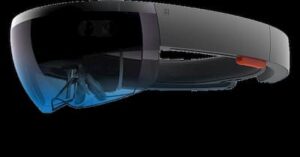
Oculus Rift and other augmented reality combined with Google Glass are the closest to bringing holograms into the world.Moving on, Microsoft’s Kinect developed a new platform that brings a simulated reality into both the workplace and living rooms. This new system is called HoloLens, which takes the shape of a pair of goggles rather than a holo suite. Unlike Oculus Rift, HoloLens does not attempt to trick your brain into thinking it’s someplace else. At the same time, it uses augmented reality (AR) to overlay holograms into your everyday space.

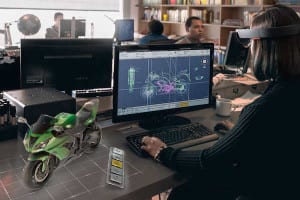
To use it every day, we add holograms everyone uses, from mechanics to brain surgeons. Some teachers find numerous ways to leverage holographic technology at every level of education. No doubt, there is an entertainment industry that might discover ways to use the technology for video games. We know it’s cool, but 3D printing is a king. What do you think about why we care about the HoloLens? HoloLens comes with new opportunities for 3D design. It sketches 3D images on a 2D surface with the HoloLens, designers, and engineers that design and develop using 3D parts in 3D.

Microsoft realises how much potential it needs to design the new platform. It includes instances for 3D design, including demos and other video marketing. One shouldn’t be surprised if the HoloLens shipped with 3D design software comes with haptic feedback tools. Users can add a pair of haptic gloves that suddenly comes with the ability to mould new parts, including a 3D mouse or stylus.

The Possibilities of HoloLens for Engineering Design

Design

The design of HoloLens is inspiring. Also, the design engineers will go beyond traditional 3D monitors that are controlled via mouse or touch. It gives immersive 3D in the real world that uses gestures and voice. Holograms allow to visualise how something would look in the physical world. It can benefit of 3D editing and authoring capabilities, mimicking how you would interact with something in real life.

We create a physical mock-up or prototype just by using foam, clay and various other mediums for modelling. This is what we design with HoloLens. It comes with more tools and fewer constraints, adding it to the real world. One can share it with all holograms by collaborating it remotely. Users can even turn them into physical objects and HoloStudio’s 3D print compatibility.

Fix

To think about all the possibilities, one needs to find the field service and repair the products and machines. Withstanding next to an aircraft or vehicle, users can have digital instructions pinned as holograms. The 3D animation within the actual physical context available right in front of you brings remote colleagues or advisors along with HoloNotes on Skype. It allows them to see the environment from their tablet to troubleshoot and collaborate on a repair on the spot. The user has to draw instructions that appear as animations and helps through walk a new process.

Simulate

It comes with new ways to learn the powerful capability of HoloLens. In both field and design service training scenarios, users can learn, visualise and examine in 3D. Additionally, one can understand how a product works in the actual environment. It’s a different inspection performed on a product or individual tests that meet the product with safety standards. Moreover, it simulates an unsafe environment that practices what you’d do in that situation.

3D Design Service

For additional information about professional CAD drafting services, connect to ASTCAD Services company. Call on 1800 287 223 or 07 3149 3547 today and discuss your requirements.


What are 3D Design Services?u003cbru003e

3D design services involve the creation of three-dimensional digital models, visualizations, and simulations to depict objects, products, buildings, or environments in a virtual space. These services are offered by professionals and firms specializing in computer-aided design (CAD), 3D modeling, rendering, and animation.u003cbru003eu003cbru003eu003cstrongu003eHere are some common types of 3D design services:u003c/strongu003eu003cbru003eu003cbru003eu003cstrongu003eProduct Designu003c/strongu003e: 3D design services are often used to develop virtual prototypes of products, allowing designers and engineers to visualize, iterate, and refine their designs before manufacturing. This includes consumer products, industrial equipment, machinery, automotive components, and more.u003cbru003eu003cstrongu003eArchitectural Visualizationu003c/strongu003e: Architects and real estate developers use 3D design services to create realistic renderings and walkthroughs of buildings, interiors, and landscapes. These visualizations help clients and stakeholders better understand the design concept, spatial layout, and aesthetic appeal of architectural projects.u003cbru003eu003cstrongu003eInterior Designu003c/strongu003e: Interior designers utilize 3D design services to create virtual models of interior spaces, including residential homes, commercial offices, retail stores, restaurants, and hospitality venues. These models allow designers to experiment with different layouts, furniture arrangements, materials, and lighting effects to achieve the desired ambiance and functionality.u003cbru003eu003cstrongu003eAnimation and Visual Effectsu003c/strongu003e: 3D design services are employed in the entertainment industry to produce animated films, video games, special effects, and virtual simulations. This involves creating lifelike characters, environments, and dynamic sequences through 3D modeling, texturing, rigging, animation, and rendering techniques.u003cbru003eu003cstrongu003eEngineering and Prototypingu003c/strongu003e: Engineers and manufacturers use 3D design services to develop detailed models of mechanical components, assemblies, and prototypes. These models facilitate design analysis, testing, and validation of engineering concepts, helping to identify and resolve potential issues early in the product development process.u003cbru003eu003cstrongu003eMedical and Scientific Visualizationu003c/strongu003e: In the fields of medicine and science, 3D design services are utilized to create anatomical models, surgical simulations, and scientific visualizations. These models aid in medical education, research, diagnosis, treatment planning, and public outreach.u003cbru003eu003cstrongu003eVirtual Reality (VR) and Augmented Reality (AR)u003c/strongu003e: With the growing popularity of VR and AR technologies, 3D design services are increasingly used to develop immersive experiences and interactive applications. This includes virtual tours, training simulations, gaming experiences, and marketing presentations that leverage the capabilities of VR and AR platforms.

What is 3D services?

u00223D servicesu0022 is a broad term that encompasses a range of offerings related to three-dimensional (3D) design, modeling, visualization, and animation. These services are provided by professionals, agencies, studios, or freelancers with expertise in computer-aided design (CAD), 3D modeling software, rendering, and animation techniques. Here are some common types of 3D services:u003cbru003eu003cstrongu003e3D Modelingu003c/strongu003e: This involves creating digital representations of objects, products, characters, environments, or architectural structures in three-dimensional space. 3D modelers use specialized software to sculpt, manipulate, and refine geometric shapes, surfaces, and textures to achieve the desired form and detail.u003cbru003eu003cstrongu003e3D Renderingu003c/strongu003e: Rendering is the process of generating photorealistic images or animations from 3D models. Render artists use rendering software to simulate lighting, materials, shadows, reflections, and other visual effects to create lifelike representations of virtual scenes.u003cbru003eu003cstrongu003eArchitectural Visualizationu003c/strongu003e: Architectural firms and real estate developers utilize 3D services to create visualizations, renderings, and virtual tours of architectural designs. This helps clients and stakeholders visualize proposed buildings, interiors, landscapes, and urban developments before construction begins.u003cbru003eu003cstrongu003eProduct Visualizationu003c/strongu003e: Companies in various industries, such as consumer goods, automotive, electronics, and furniture, use 3D services to create digital prototypes and marketing visuals of their products. This includes 3D product modeling, rendering, and animation for promotional materials, packaging, websites, and advertisements.u003cbru003eu003cstrongu003eAnimation and Motion Graphicsu003c/strongu003e: Animators and motion graphics artists employ 3D services to produce animated sequences, visual effects, and motion graphics for films, television shows, commercials, video games, and multimedia presentations. This involves character animation, rigging, keyframing, particle effects, and compositing techniques.u003cbru003eu003cstrongu003eVirtual Reality (VR) and Augmented Reality (AR)u003c/strongu003e: With the rise of VR and AR technologies, 3D services are increasingly used to develop immersive experiences and interactive applications. This includes creating 3D models, environments, simulations, and interactive interfaces for VR/AR platforms, training programs, educational content, and marketing campaigns.u003cbru003eu003cstrongu003eMedical and Scientific Visualizationu003c/strongu003e: In the fields of medicine, biology, and science, 3D services are employed to create anatomical models, medical illustrations, scientific visualizations, and educational materials. This helps researchers, educators, and healthcare professionals visualize complex biological structures, processes, and data.


JH

James Hartley

Senior Mechanical Engineer · BEng (Mechanical), UQ · Member, Engineers Australia · ASTCAD, Brisbane

James has 14 years of hands-on experience delivering CAD design, structural drafting, and engineering documentation across Australia’s mining, oil & gas, and manufacturing sectors. He specialises in SolidWorks, Autodesk Inventor, and AutoCAD for complex multi-discipline projects.

More articles by James Hartley →
engineers cad drinks

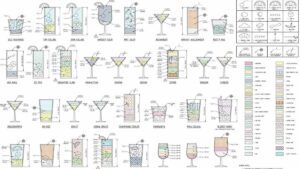
Autodesk Introduces Whisky Drinks for AutoCAD and CAD Drinks for Engineers – Helping Them Plot Their Own Cocktails. Now Autodesk users can download their own copy of CAD drinks, and learn to mix cocktails with precision.

The DWG files contain all the information about the technique of mixing your drinks – simply by shaking them or by stirring with/without cracked ice. The schematics also suggest what glass to use, which ingredients go first and lists all the details of what to put in your glass and how, drawn right there – orange segment, pineapple chunk, onions, cherry, mint leaves, ice cubes, finely granulated sugar and the list goes on, all have a different recognizable graphics.

The drafts are drawn to scale in elevation, here alcoholic and non alcoholic drinks are color coded and rendered and the files are available in downloadable DWG file formats. The info graphics are prepared to appeal to an architect/ engineers brain and are replete with instructions for mixing and consumption of the drinks.

CAD drinks promises fun hour for architects and engineers as they meet after work, and design their cocktails just like they design buildings and machines. Designed by an engineer Shaan Herley, the chart codes more than 70 cocktails in their classic form right from the traditional Martini, to the popular Pina Colada.

Download Whiskey Drinks AutoCAD DWG File

Engineer’s CAD Drinks for industries

It seems like you are looking for information about CAD (Computer-Aided Design) software used in the context of designing drinks for industries. However, the concept of “CAD Drinks” might be a bit unclear. Let me try to provide some information based on the given context.

In the food and beverage industry, including the beverage industry, CAD software is commonly used for various purposes, such as designing packaging, manufacturing equipment, and even planning layout and workflow in processing plants. Here are some potential applications of CAD in the drink industry:

  1. Packaging Design: CAD software can be used to create 2D and 3D models of beverage containers, such as bottles, cans, and tetra packs. Engineers and designers can use these models to optimize the shape, size, and functionality of the packaging.
  2. Equipment Design: CAD is utilized to design machinery and equipment used in the production and processing of beverages. This includes components like mixers, pumps, conveyors, and filling machines. Designers can model and simulate these machines to ensure efficient and safe operation.
  3. Factory Layout: CAD software can assist in planning and designing the layout of a beverage manufacturing facility. Engineers can create detailed floor plans that optimize space usage and workflow efficiency.
  4. Process Simulation: CAD tools with additional capabilities for process simulation can help engineers evaluate and optimize the beverage production processes. This may include heat transfer simulations for pasteurization or CFD (Computational Fluid Dynamics) for mixing and flow analysis.
  5. Label and Branding Design: CAD software can be used to create label designs for beverage bottles or packaging. Designers can visualize and iterate on label designs before production.
  6. Quality Control and Testing: CAD can be used to create test fixtures and molds for quality control testing of beverage products.

It’s important to note that while CAD software is widely used in various industries, specific applications may vary depending on the unique requirements and processes of each industry and company.

Computer-Aided Design (CAD) has become an indispensable tool in the beverage industry, providing engineers, designers, and manufacturers with a wide range of applications to streamline and optimize their processes. From conceptualizing the initial design to final production, CAD software plays a vital role in enhancing product development, improving efficiency, and ensuring quality in the beverage manufacturing process.

One of the primary areas where CAD is extensively utilized is in packaging design. Engineers and designers can create intricate 3D models of beverage containers, exploring various shapes, sizes, and materials to find the most functional and visually appealing packaging solutions. These digital prototypes enable rapid iteration, cost-saving, and a reduction in material waste during the physical prototyping stage.

Moreover, CAD software aids in the development of machinery and equipment used in beverage production. Engineers can design complex processing equipment, such as blenders, filtration systems, and carbonation units, with precision and accuracy. By simulating the equipment’s performance in the CAD environment, potential issues can be identified and rectified before they become costly problems during actual production.

In large-scale beverage manufacturing plants, factory layout planning is critical for optimal workflow and resource management. CAD tools enable engineers to create comprehensive floor plans, visualizing the placement of machinery, production lines, storage areas, and employee workstations. This ensures that the plant’s layout maximizes space utilization and minimizes bottlenecks, leading to increased productivity and reduced downtime.

What type of engineers use CAD?

Several types of engineers use Computer-Aided Design (CAD) software in their work, including:u003cbru003eu003cstrongu003eMechanical Engineersu003c/strongu003e: They use CAD to design mechanical systems, machinery, components, and products.u003cbru003eu003cstrongu003eCivil Engineersu003c/strongu003e: CAD helps them design infrastructure projects such as roads, bridges, dams, and buildings.u003cbru003eu003cstrongu003eElectrical Engineersu003c/strongu003e: CAD is used in the design of electrical systems, circuits, and components.u003cbru003eu003cstrongu003eAerospace Engineersu003c/strongu003e: CAD is vital for designing aircraft, spacecraft, and related components.u003cbru003eu003cstrongu003eArchitectural Engineersu003c/strongu003e: CAD assists in designing architectural structures, including buildings and interior spaces.u003cbru003eu003cstrongu003eAutomotive Engineersu003c/strongu003e: CAD is used extensively in designing vehicles, their components, and systems.u003cbru003eu003cstrongu003eEnvironmental Engineersu003c/strongu003e: CAD aids in designing environmental systems and solutions, such as wastewater treatment plants and pollution control devices.u003cbru003eCAD software allows engineers from various disciplines to create detailed digital models of their designs, facilitating visualization, analysis, and collaboration throughout the design process.

Do engineering students use CAD?

Yes, engineering students often use CAD software as part of their academic curriculum. Many engineering programs include courses specifically dedicated to teaching CAD skills. These courses aim to familiarize students with CAD software and its applications in their respective fields of study.u003cbru003eu003cstrongu003eUsing CAD software allows engineering students to:u003c/strongu003eu003cbru003eu003cstrongu003eGain practical skills: u003c/strongu003eCAD software is widely used in industry, so learning it during their studies prepares students for their future careers.u003cbru003eu003cstrongu003eVisualize concepts:u003c/strongu003e CAD enables students to create digital models of engineering designs, helping them visualize complex concepts and understand how different components interact.u003cbru003eu003cstrongu003eDesign projects:u003c/strongu003e Engineering students often have design projects as part of their coursework, and CAD software provides them with the tools to create detailed and accurate designs.u003cbru003eu003cstrongu003eCollaborate with peers:u003c/strongu003e CAD software allows students to collaborate with their classmates on group projects by sharing digital models and working on them together.


JH

James Hartley

Senior Mechanical Engineer · BEng (Mechanical), UQ · Member, Engineers Australia · ASTCAD, Brisbane

James has 14 years of hands-on experience delivering CAD design, structural drafting, and engineering documentation across Australia’s mining, oil & gas, and manufacturing sectors. He specialises in SolidWorks, Autodesk Inventor, and AutoCAD for complex multi-discipline projects.

More articles by James Hartley →
Intelligent P&IDs

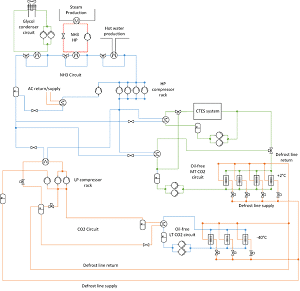
Intelligent P&IDs for piping systems are 2D Piping & Instrumentation Diagrams generated using symbols for equipment, instruments, components etc. and lines representing pipelines, instrumentation signal lines etc. as well as general elements, customized as per each client’s requirements. The information stored with each Intelligent P&ID consists of minimum required attributes for design, analysis, procurement, maintenance etc. The inputs for such intelligence would be from process flow sheets, instrumentation schematics, equipment data sheets, valve and instrumentation specification sheets, piping material specifications, etc. and can also be in the form of drawings and documents.

The P&ID database so generated from Intelligent P&IDs for the entire plant / project, when linked to the Central Database, the integrated Plant Information Management System, leads to numerous advantages over conventional non-intelligent P&IDs, as listed below.

Benefits for new “green-field” plants:

As project progresses, Intelligent P&IDs

  • Captures, organizes and updates data related to design, procurement, construction etc.
  • Provides single data entry with outputs such as Line List, Valve List, Equipment List, etc.
  • Associates engineering data, drawings and documents to graphics.
  • Checks the integrity between the processes captured in that and the corresponding intelligent 3D Plant model at all times and helps in resolving discrepancies between them.
  • Alerts layout designers about process changes.
  • Generates standard AutoCAD files with built-in intelligence. Highlights graphically in Intelligent P&ID the equipment, valves, instruments and specialties that are placed in the 3D Plant model.
  • Generates reports on items placed in intelligent 3D Plant model in line with Intelligent P&IDs.

Benefits for operating “brown-field” plants:

  • From database, plant operating and maintenance (O&M) personnel could at any time rapidly retrieve attributes of equipment, nozzles, pipe lines, valves etc.
  • The plant O&M personnel could use it to arrive at alternate processes in case of failure of any equipment (such as a pump), leakage of a valve etc.
  • The database can be extended to include customized inspection / maintenance management functions or can be linked directly to the client’s in-house database systems.
  • This will also help in any future retrofit / expansion project.

What are the advantages of Pu0026amp;ID diagram?

u003cstrongu003ePu0026amp;ID (Piping and Instrumentation Diagram) diagrams offer several advantages in various engineering disciplines, particularly in process engineering and industrial settings:u003c/strongu003eu003cbru003eu003cstrongu003eClarity and Understandingu003c/strongu003e: Pu0026amp;IDs provide a clear visualization of the process flow, equipment, and instrumentation involved in a system, aiding in understanding the entire process at a glance.u003cbru003eu003cstrongu003eStandardizationu003c/strongu003e: Pu0026amp;IDs follow standard symbols and conventions recognized globally, ensuring consistency across different projects and industries. This standardization facilitates communication among engineers, operators, and stakeholders.u003cbru003eu003cstrongu003eDocumentationu003c/strongu003e: Pu0026amp;IDs serve as essential documentation for the design, construction, operation, and maintenance of a process plant or system. They provide a comprehensive reference for engineers, operators, and maintenance personnel.u003cbru003eu003cstrongu003eSafetyu003c/strongu003e: By depicting safety features such as relief valves, interlocks, and emergency shutdown systems, Pu0026amp;IDs help identify potential hazards and mitigate risks, enhancing overall safety in the process.u003cbru003eu003cstrongu003eTroubleshooting and Maintenanceu003c/strongu003e: Pu0026amp;IDs assist in troubleshooting issues and planning maintenance activities by providing a detailed overview of the system’s components and their interconnections.u003cbru003eu003cstrongu003eDesign Optimizationu003c/strongu003e: Engineers can use Pu0026amp;IDs to optimize the design of a process by analyzing the flow of materials, energy consumption, and equipment performance, leading to more efficient operations.u003cbru003eu003cstrongu003eRegulatory Complianceu003c/strongu003e: Pu0026amp;IDs aid in demonstrating compliance with regulatory requirements by documenting the design and operational aspects of a process, facilitating audits and inspections.u003cbru003eu003cstrongu003eTraining and Educationu003c/strongu003e: Pu0026amp;IDs serve as valuable educational tools for training operators and new employees, helping them understand the process and its components in a structured manner.u003cbru003eu003cstrongu003eIntegration with Control Systemsu003c/strongu003e: Pu0026amp;IDs provide the basis for developing control strategies and programming logic for automation and control systems, enabling efficient operation and monitoring of the process.u003cbru003eu003cstrongu003eCommunicationu003c/strongu003e: Pu0026amp;IDs act as a common language for communication among engineers, operators, contractors, and other stakeholders involved in the design, construction, and operation of a process plant.


JH

James Hartley

Senior Mechanical Engineer · BEng (Mechanical), UQ · Member, Engineers Australia · ASTCAD, Brisbane

James has 14 years of hands-on experience delivering CAD design, structural drafting, and engineering documentation across Australia’s mining, oil & gas, and manufacturing sectors. He specialises in SolidWorks, Autodesk Inventor, and AutoCAD for complex multi-discipline projects.

More articles by James Hartley →
CAD Drafters

Today’s CAD designers will have to obtain, at the very minimum, an associate’s degree. Course work in this career field should ideally begin in high school, with a focus on art, science, computer technologies, math, and drafting. Upon entering college, students should continue to pursue courses they were unable to obtain in high school, as well as more courses in composition, engineering, technical drawing, manufacturing design processes, and CAD architectural drafting and dimensioning computer classes.

For those desiring a bachelor’s degree, most universities do not offer a 4-year degree in CAD design. However, there are viable degree choices to gain the educational experience required, such as in mathematics, engineering, computer architecture, and computer science. Some students opt to start an internship with an employer, after obtaining their associate’s degree and while pursuing a bachelor’s degree, as this helps enable them to choose the most appropriate degree and courses.

Job Responsibilities of CAD Designers

The primary job responsibility of designers will be the middle men and women who will have to bridge the gap between top level engineers and architects, and production/construction processes. In addition, CAD designers have to know how to read drawings and schematics to be able to answer questions posed to them by production/construction staff. Further, designers are going to have to become experts in their particular industry segment, as well as be proficient in basic drafting and the latest CAD computer technologies.

Salary Outlook for CAD Designers

Salaries for CAD designers are largely related to specific CAD industries. According to the www.payscale.com Statistics, in 2015 starting salaries for CAD designers ranged from $51,038 to just over $62,000 annually. Designers who specialized in electrical fields commanded the higher starting salaries, while careers in mechanical, civil, and architectural related fields started at the lower end. It is important to remember that these are median salary ranges and other factors, like the cost of living in a particular area, influence the starting salaries being offered by employers.

For employers, CAD designers provide the opportunity to save money, since they can be tasked with the bulk of layout, modification, and change work, and they eliminate the need to have to pay a much more experienced professional to do this work. In addition, new designers provide employers the ability to train them to fit with their specific industry segment and processes. As a result, the turn-around time on projects is faster and is still completed accurately and precisely, allowing the business to take on more clients and expand their operations.

CAD Drafters

If you are looking for experienced CAD drafters designers to assist with projects or other CAD drafting services, please feel free to contact ASTCAD at 1800 287 223 or 07 3149 3547  today.

What degree do you need to be a CAD drafter?

To become a CAD drafter, you typically need at least an associate degree or a certificate in drafting or a related field. These programs are offered by community colleges, technical institutes, and vocational schools and usually take one to two years to complete.u003cbru003eu003cbru003eu003cstrongu003eCommon degree options include:u003c/strongu003eu003cbru003eu003cstrongu003eAssociate Degree in Drafting Technology: u003c/strongu003eThis program provides comprehensive training in CAD software, drafting techniques, and industry standards. It covers topics such as geometric dimensioning and tolerancing (GDu0026amp;T), technical drawing, and engineering principles.u003cbru003eu003cstrongu003eCertificate in Computer-Aided Drafting (CAD): u003c/strongu003eThis shorter program focuses specifically on CAD software skills and may be suitable for individuals who already have some background in drafting or a related field.u003cbru003eu003cbru003eWhile a degree or certificate is often the minimum requirement for entry-level CAD drafting positions, some employers may also prefer candidates with additional qualifications or specialized training. This could include specific certifications in CAD software (such as Autodesk AutoCAD or SolidWorks), as well as knowledge of industry-specific standards and regulations.u003cbru003eu003cbru003eUltimately, the specific educational requirements for CAD drafters can vary depending on the employer and the specific role, but a combination of formal education, relevant experience, and proficiency in CAD software is typically necessary to succeed in this field.

What qualifications do you need to be a CAD drafter?

u003cstrongu003eTo become a CAD drafter, you need a combination of education, skills, and qualifications. Here are the key qualifications typically required:u003c/strongu003eu003cbru003eu003cbru003eTo become a CAD drafter, you need a combination of education, skills, and qualifications. Here are the key qualifications typically required:u003cbru003eu003cstrongu003eEducation: u003c/strongu003eMost CAD drafters have at least an associate degree or a certificate in drafting, computer-aided design (CAD), or a related field. Some employers may prefer candidates with a bachelor’s degree in engineering, architecture, or a related discipline for more advanced positions.u003cbru003eCAD Software Proficiency: CAD drafters must be proficient in using CAD software, such as Autodesk AutoCAD, SolidWorks, Autodesk Inventor, CATIA, or Revit. They should be able to create, modify, and manipulate technical drawings and 3D models efficiently.u003cbru003eu003cbru003eTu003cstrongu003eechnical Drawing Skills:u003c/strongu003e CAD drafters need strong technical drawing skills to accurately interpret sketches, specifications, and other design information. They should understand geometric dimensioning and tolerancing (GDu0026amp;T) principles and be able to create detailed, precise drawings.u003cbru003eIndustry Knowledge: CAD drafters should have a good understanding of industry-specific standards, codes, and regulations relevant to the field they work in, whether it’s architecture, engineering, manufacturing, or another industry.u003cbru003eu003cbru003eu003cstrongu003eAttention to Detail:u003c/strongu003e Precision and attention to detail are essential qualities for CAD drafters. They must accurately translate design specifications into detailed drawings, ensuring that dimensions, annotations, and other elements are correct.u003cbru003eu003cbru003eu003cstrongu003eProblem-Solving Skills:u003c/strongu003e CAD drafters often encounter technical challenges or design issues that require problem-solving skills to resolve. They should be able to identify and address issues efficiently to produce high-quality drawings.u003cbru003eu003cbru003eu003cstrongu003eCommunication Skills:u003c/strongu003e CAD drafters need strong communication skills to effectively collaborate with engineers, architects, project managers, and other stakeholders. They must be able to communicate technical information clearly and concisely.u003cbru003eu003cbru003eu003cstrongu003eContinuous Learning: u003c/strongu003eCAD technology and industry standards evolve over time, so CAD drafters should be committed to ongoing learning and professional development to stay current with new software features, techniques, and best practices. Most CAD drafters have at least an associate degree or a certificate in drafting, computer-aided design (CAD), or a related field. Some employers may prefer candidates with a bachelor’s degree in engineering, architecture, or a related discipline for more advanced positions.u003cbru003eu003cbru003eu003cstrongu003eCAD Software Proficiency: u003c/strongu003eCAD drafters must be proficient in using CAD software, such as Autodesk AutoCAD, SolidWorks, Autodesk Inventor, CATIA, or Revit. They should be able to create, modify, and manipulate technical drawings and 3D models efficiently.u003cbru003eu003cbru003eu003cstrongu003eTechnical Drawing Skills:u003c/strongu003e CAD drafters need strong technical drawing skills to accurately interpret sketches, specifications, and other design information. They should understand geometric dimensioning and tolerancing (GDu0026amp;T) principles and be able to create detailed, precise drawings.u003cbru003eu003cbru003eu003cstrongu003e u003c/strongu003eCAD drafters should have a good understanding of industry-specific standards, codes, and regulations relevant to the field they work in, whether it’s architecture, engineering, manufacturing, or another industry.u003cbru003eu003cbru003eu003cstrongu003eAttention to Detail: u003c/strongu003ePrecision and attention to detail are essential qualities for CAD drafters. They must accurately translate design specifications into detailed drawings, ensuring that dimensions, annotations, and other elements are correct.u003cbru003eu003cbru003eu003cstrongu003eProblem-Solving Skills: u003c/strongu003eCAD drafters often encounter technical challenges or design issues that require problem-solving skills to resolve. They should be able to identify and address issues efficiently to produce high-quality drawings.u003cbru003eu003cbru003eu003cstrongu003eCommunication Skills: u003c/strongu003eCAD drafters need strong communication skills to effectively collaborate with engineers, architects, project managers, and other stakeholders. They must be able to communicate technical information clearly and concisely.u003cbru003eu003cbru003eu003cstrongu003eContinuous Learning:u003c/strongu003e CAD technology and industry standards evolve over time, so CAD drafters should be committed to ongoing learning and professional development to stay current with new software features, techniques, and best practices.


CS

Claire Sutton

Architectural CAD Specialist & Technical Writer · BArch (Hons), QUT · ASTCAD, Brisbane

Claire has 10 years of experience in Revit BIM modelling, architectural documentation, and CAD conversion projects across Southeast Queensland and NSW. She has delivered NCC-compliant documentation for residential, commercial, and industrial facilities.

More articles by Claire Sutton →

Get a free quote — 1800 287 223